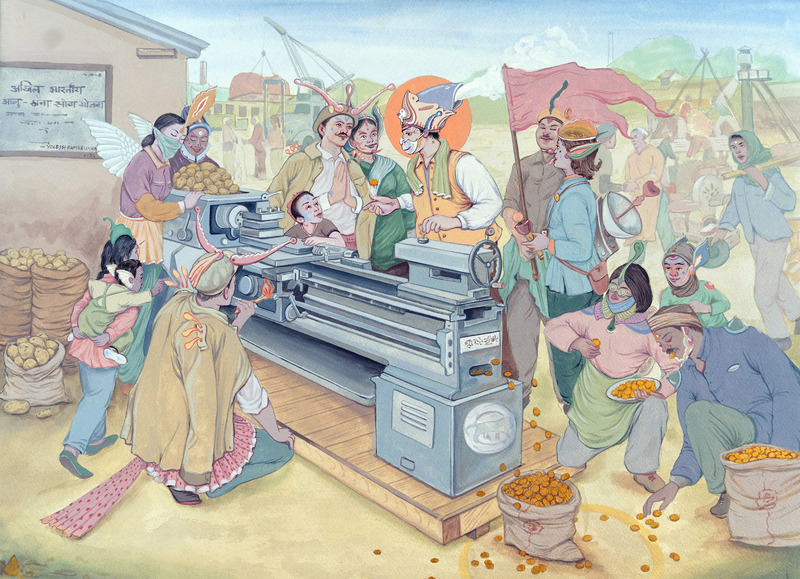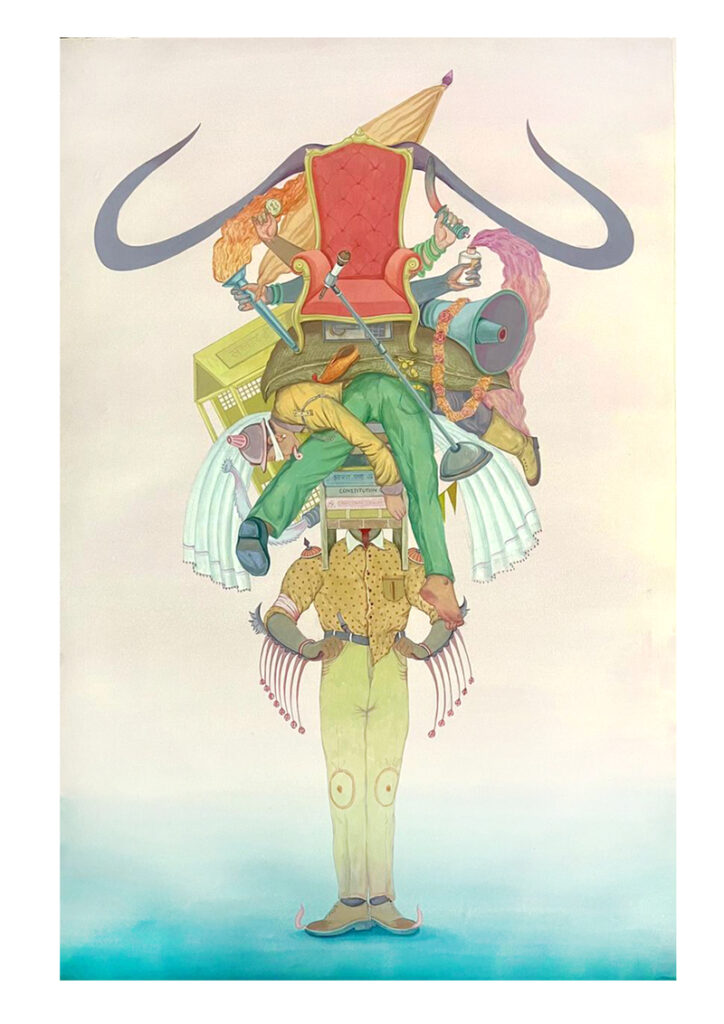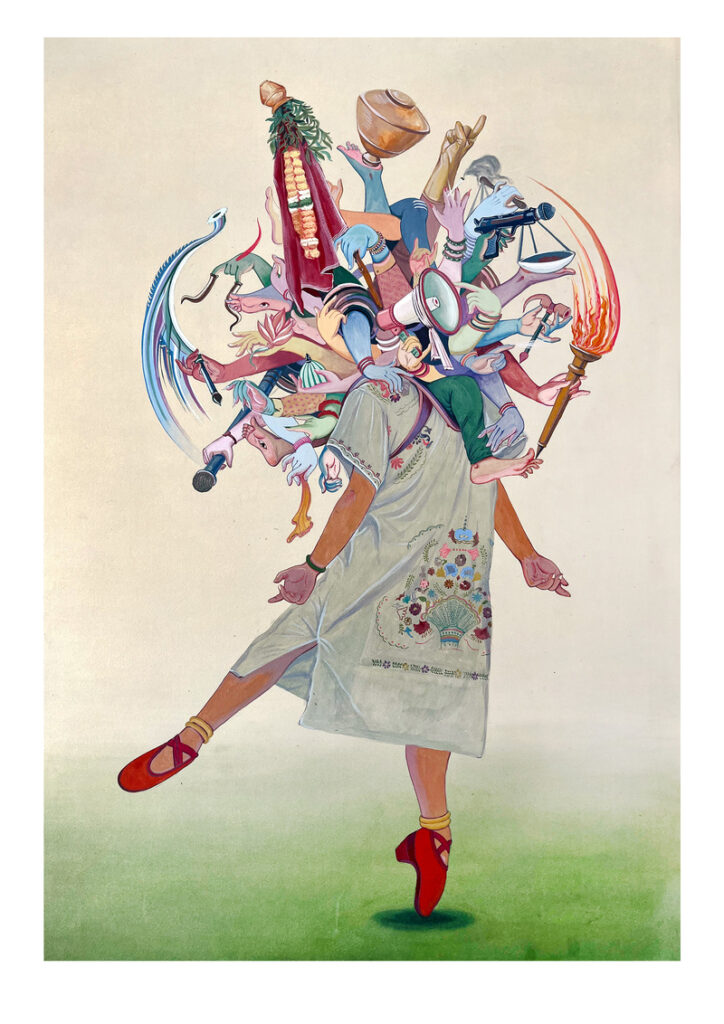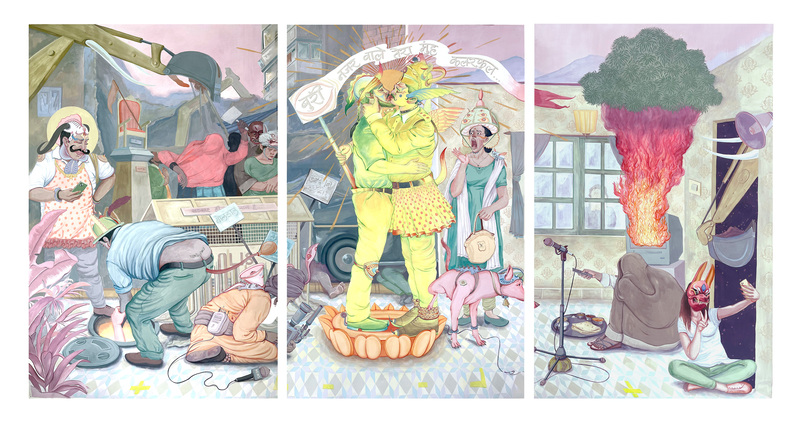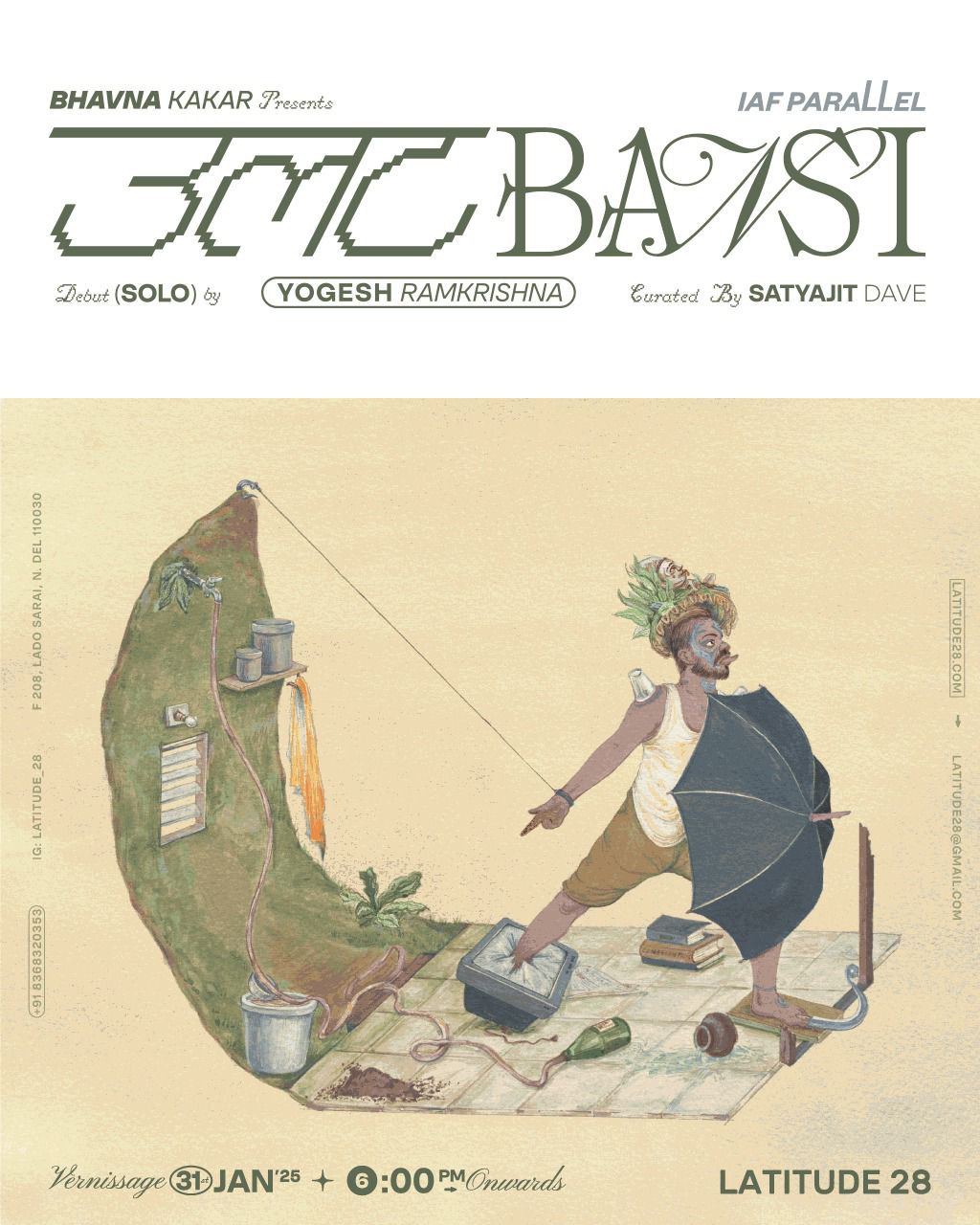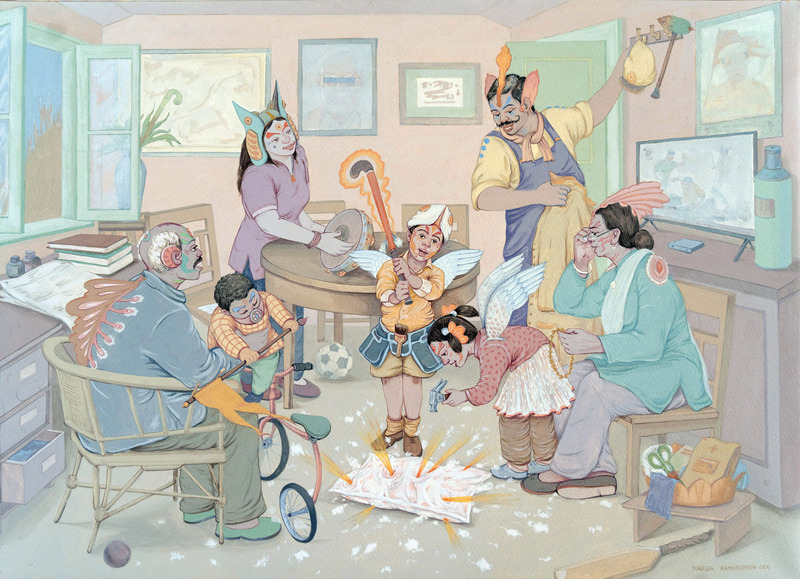
Yogesh Ramkrishna’s practice operates at the intersections of the real and the painted, constructing a metaphorical theater that reflects the complexities of life in ‘The Hyperreal’ era. His work investigates the impact of a world where simulated and fabricated realities—such as media constructs, virtual environments, and curated social media personas—are perceived as more real than reality itself. These in turn lead to evolving socio-political structures, aggressive religious insecurities, and systemic manipulations on personal and collective identity.
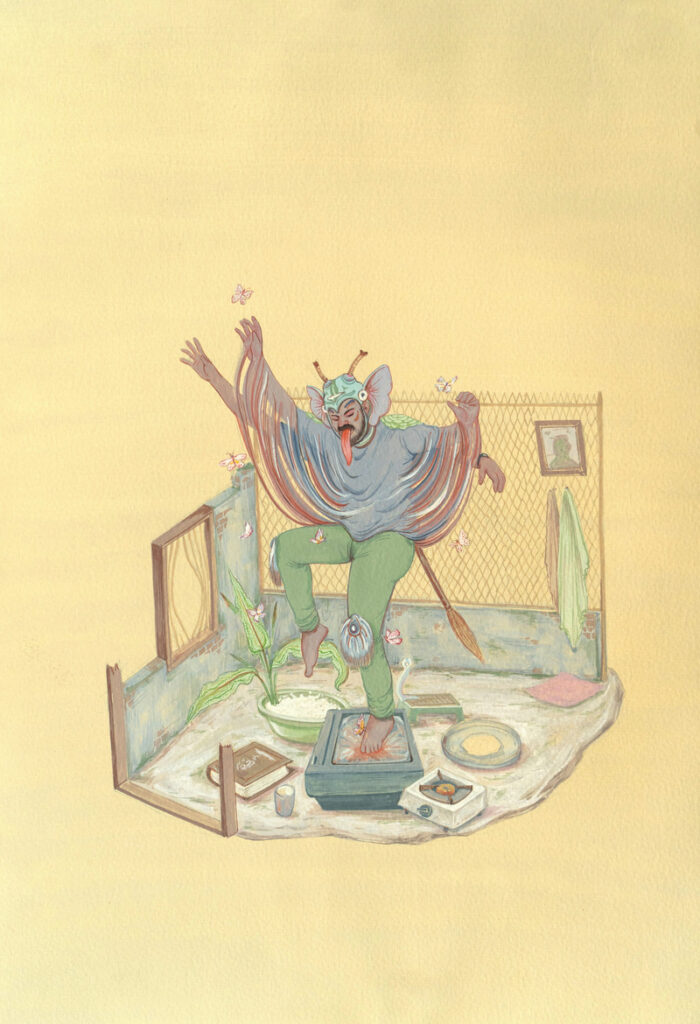
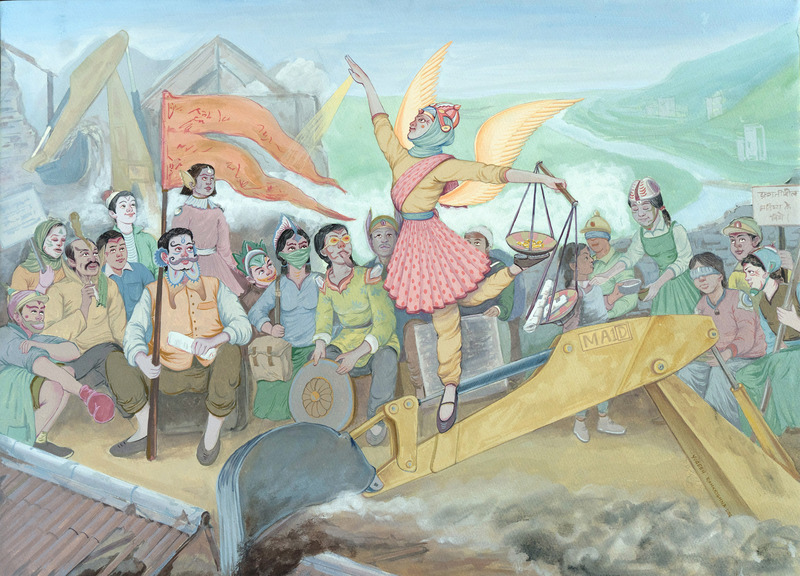
Drawing inspiration from Marathi theater and the cultural narratives of Pune, Yogesh’s practice brings together elements of drama, satire, and dark comedy where-in his work blends mythology, history, and contemporary experiences, creating thought-provoking pieces that invite viewers to reflect on their own lives. In his series like Dreams for the Blind Eyes, he critiques the hollow promises of power structures, while One Man Protest is Protest of All transforms individual acts of resistance into a symbol of collective strength. In Yoga for Survival, he invents poignant yoga poses inspired by human responses to crisis, set against the backdrop of India’s socio-political landscape.
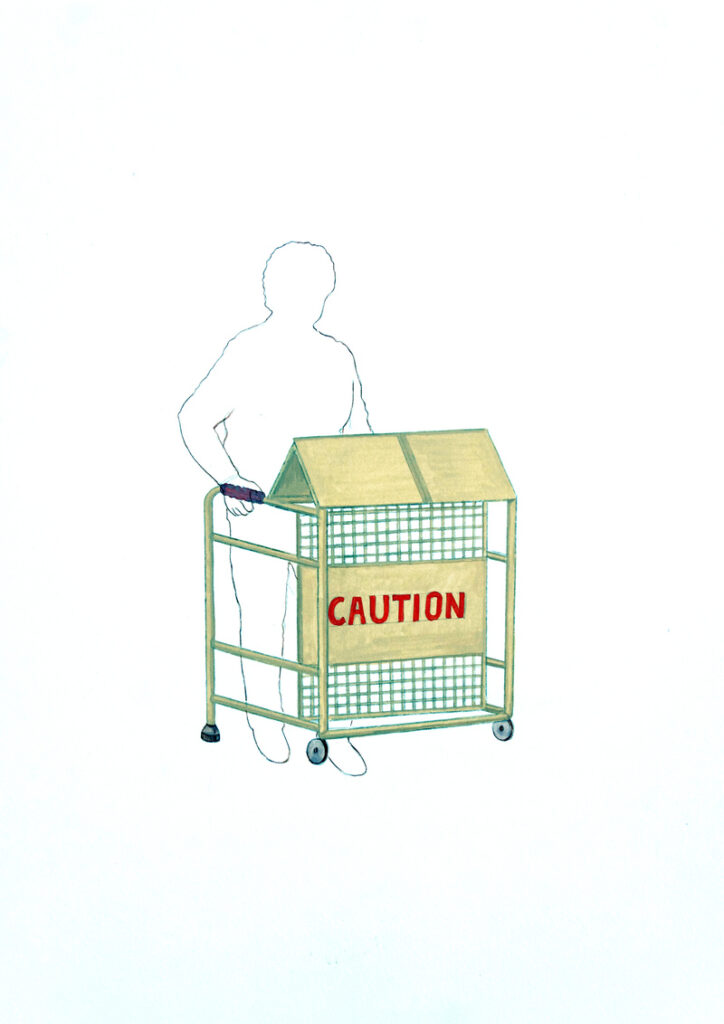
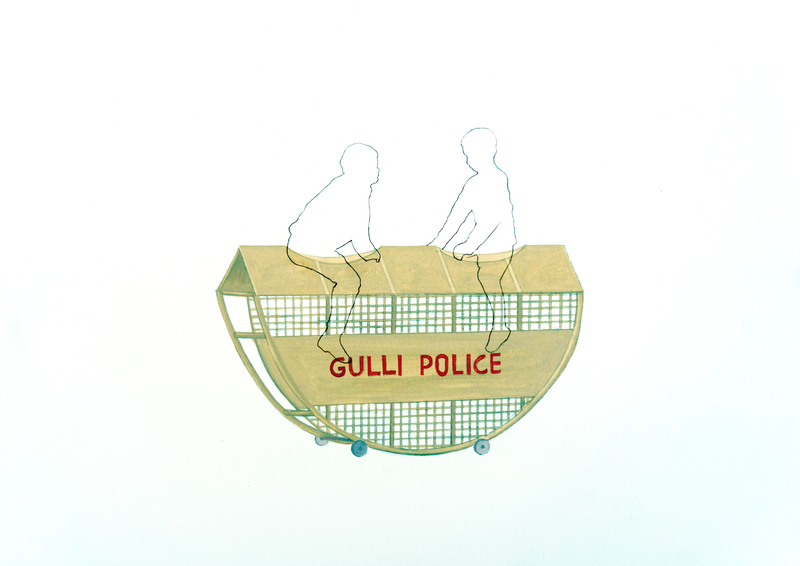
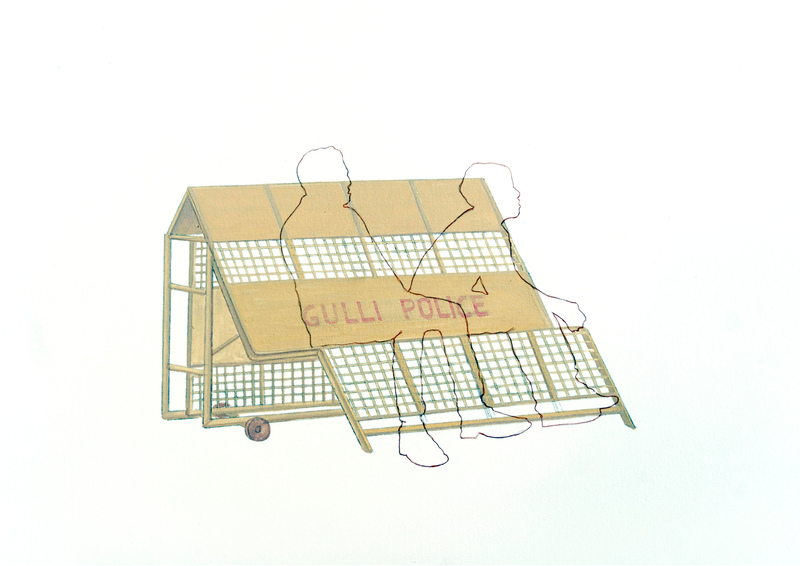
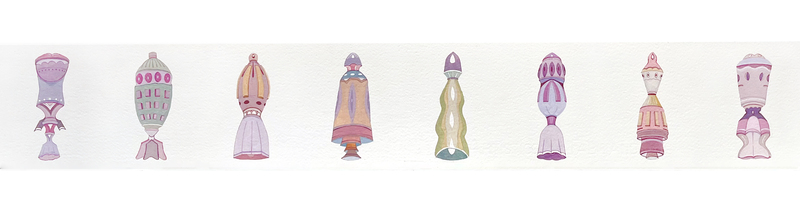
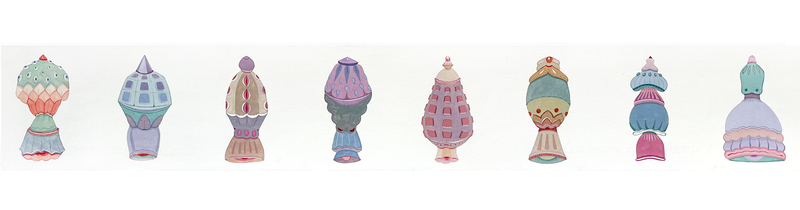
Yogesh’s use of mediums like gouache paintings, sculptural props, and interactive objects adds a tactile and immersive dimension to his work. By incorporating deliberate “glitches” as symbols of systemic errors, he draws attention to the ways society molds individuals into tools of its machinery. His ongoing projects, including Post-Truth Creatures/Carriers and Theater of Distraction, delve deeper into these ideas, creating a space where personal stories meet broader socio-political realities.
Through his work, Yogesh Ramkrishna doesn’t just create art—he creates a stage where viewers can see themselves, question their roles, and confront the stories they’ve been told. His art is both a mirror and a call to action, encouraging us to reimagine our place in the ever-shifting theater of life.
– Satyajit Dave