Between Dust and Distant Sky
Aug 21, 2026 - Sep 19, 2026
- SELECTED WORKS
- CURATORIAL NOTE
- REVIEWS
- INVITE
- PRESS RELEASE
- DOWNLOAD CATALOGUE
Between Dust, Dreams, and Distant Skies
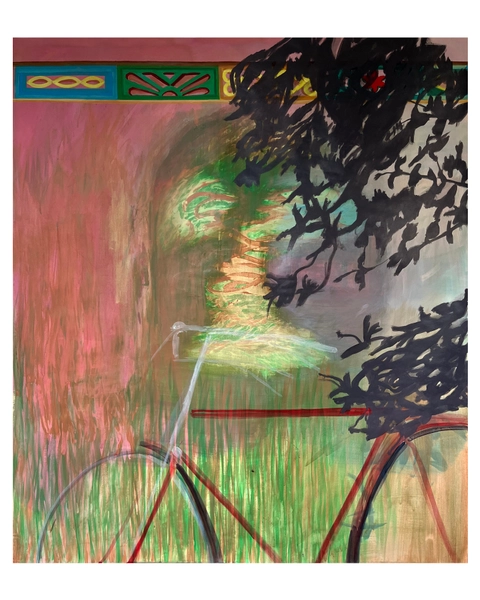
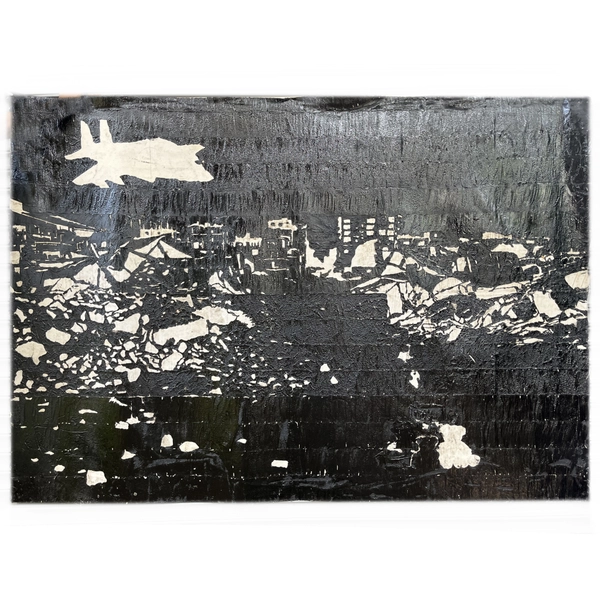
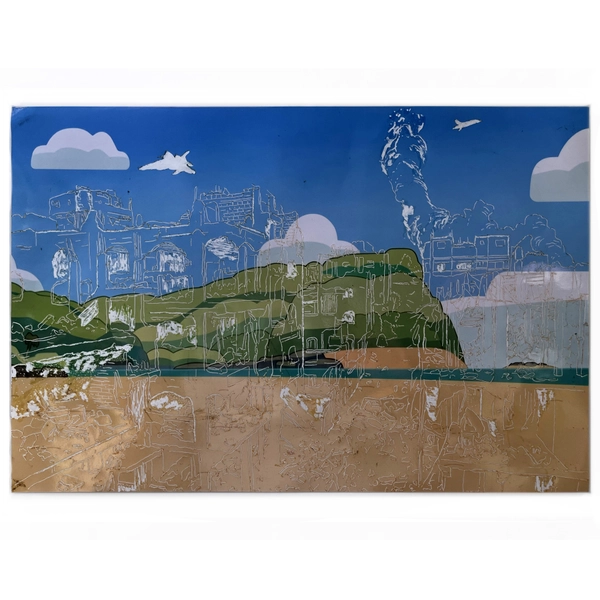
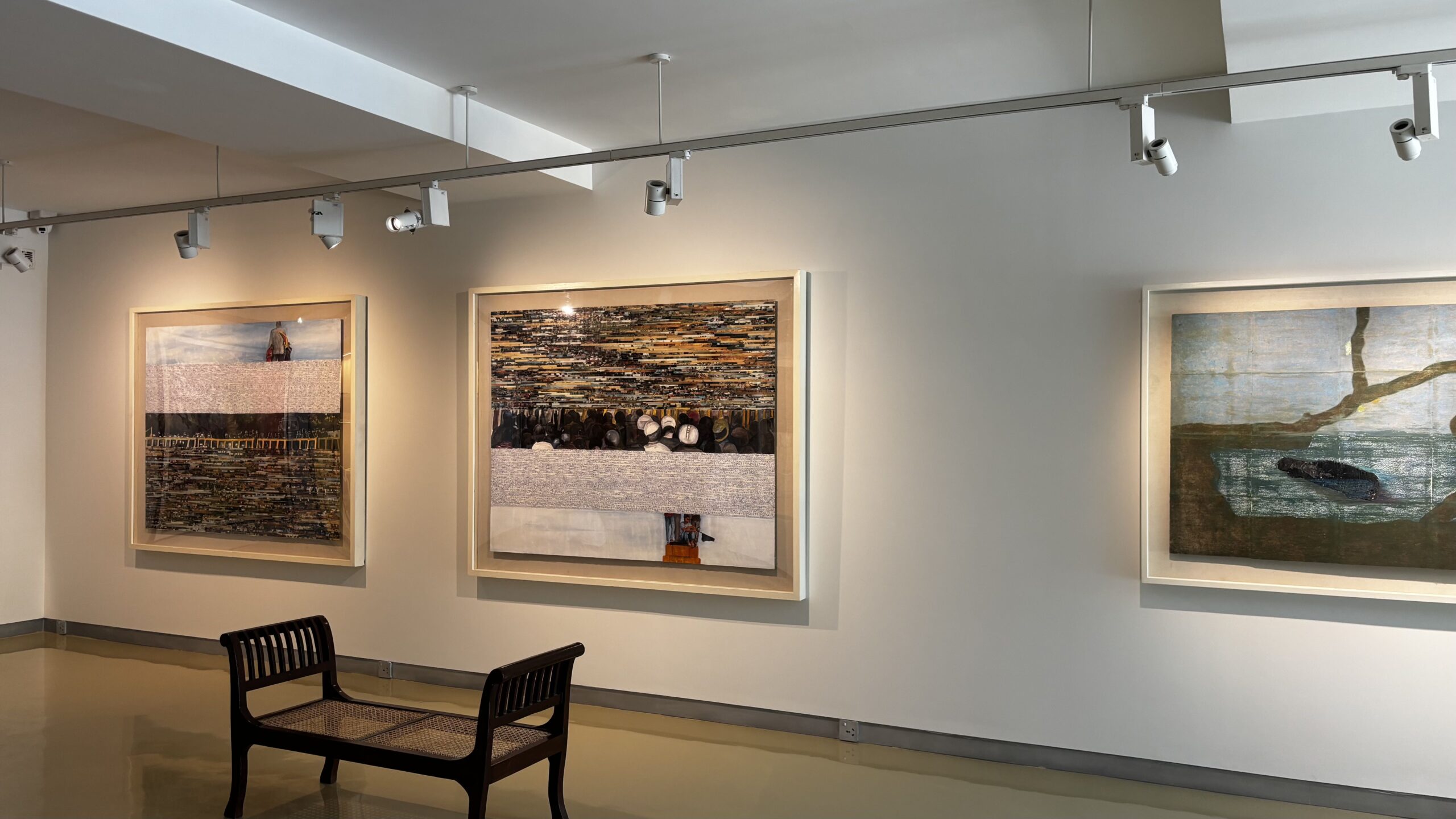
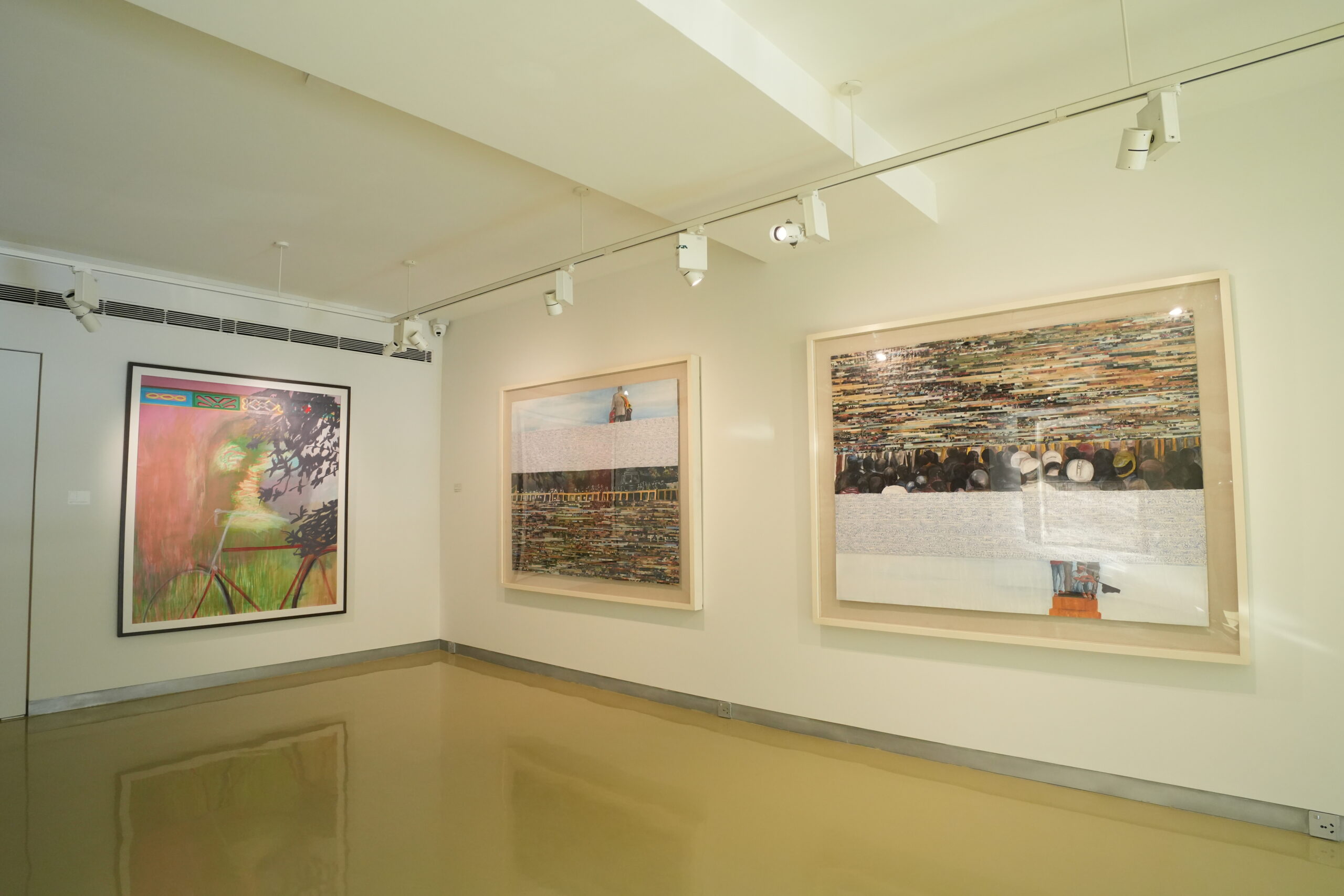
News images arrive in our lives every day. They come from places I have never visited, yet they slowly become part of my own memory. A bombed landscape in another country, a child holding a toy, a passenger aircraft, a cartoon watched by my daughter, a page from a bedtime story, a wrapping paper kept from childhood—these images do not remain separate. They begin to overlap, reshaping the way I see my own family, my own
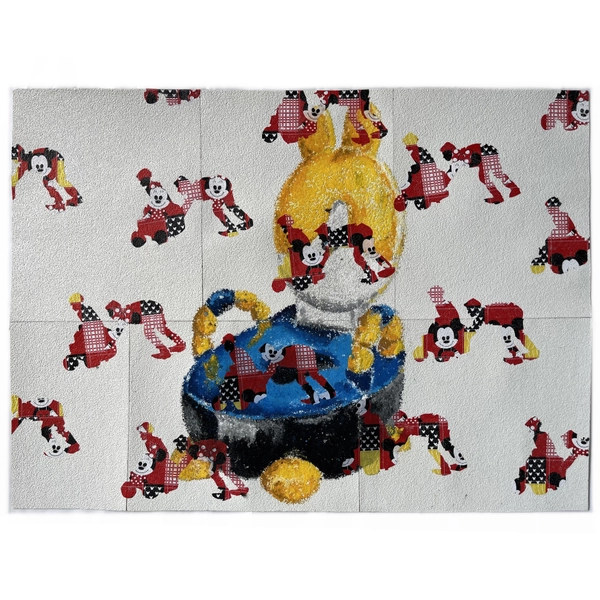
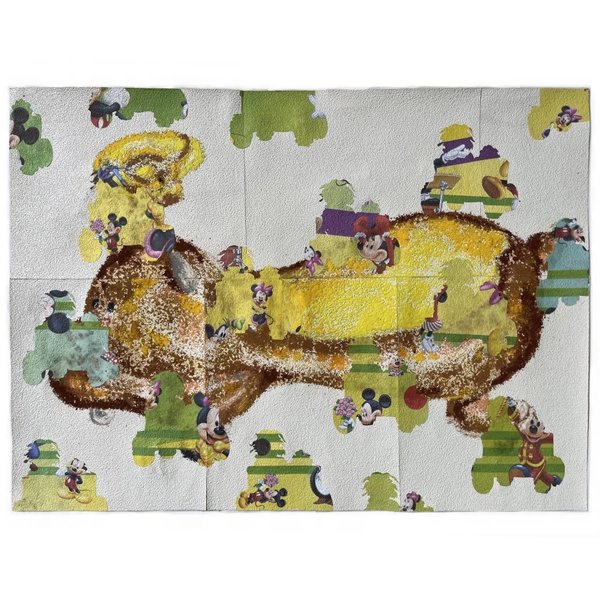
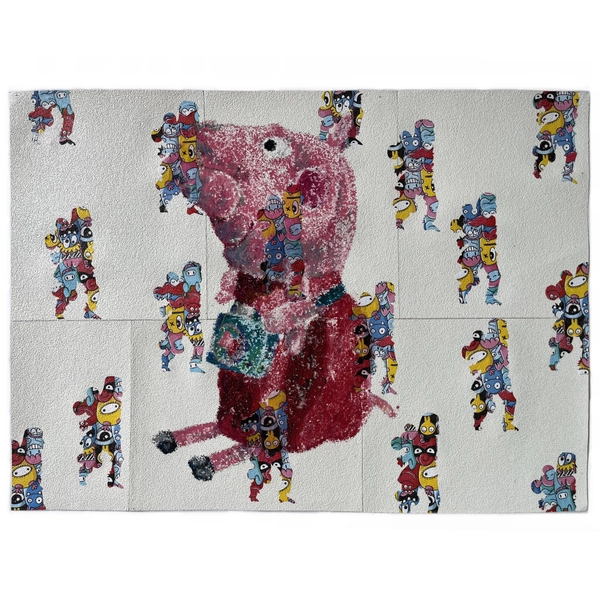
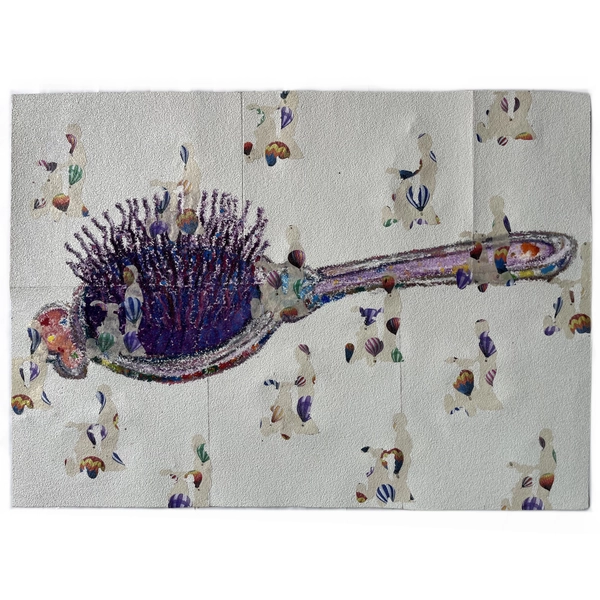
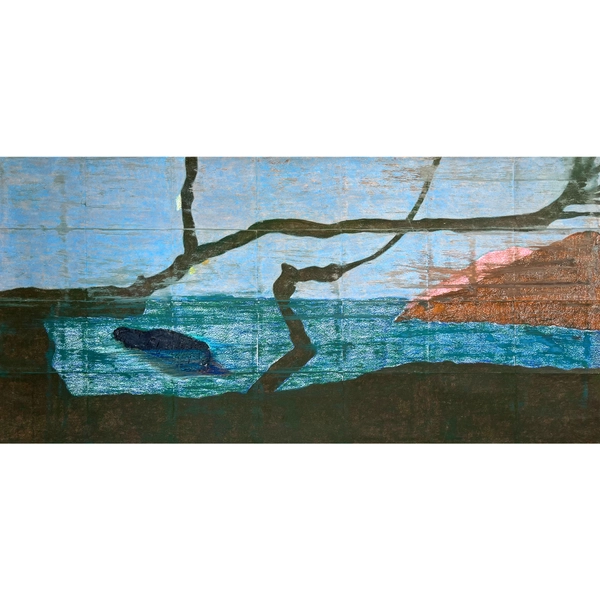
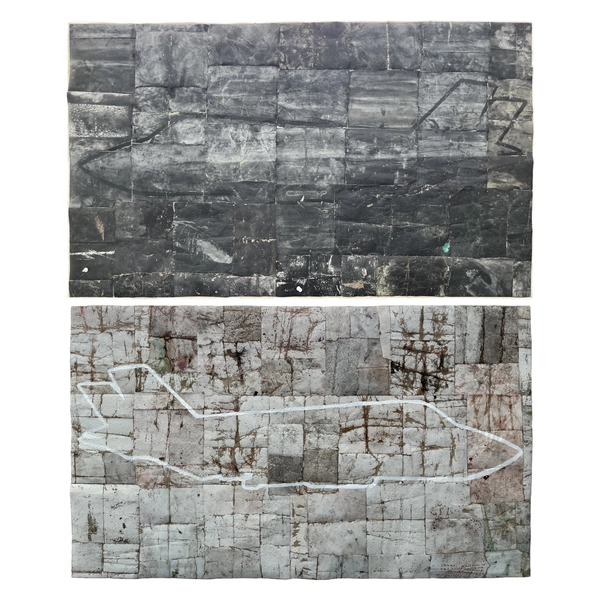
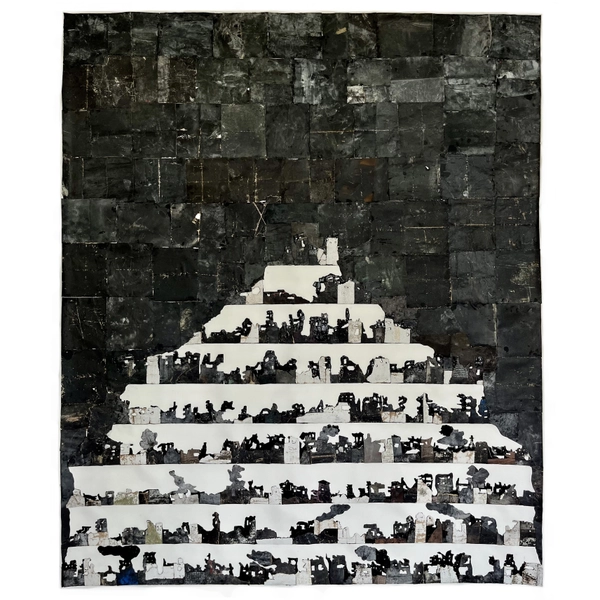
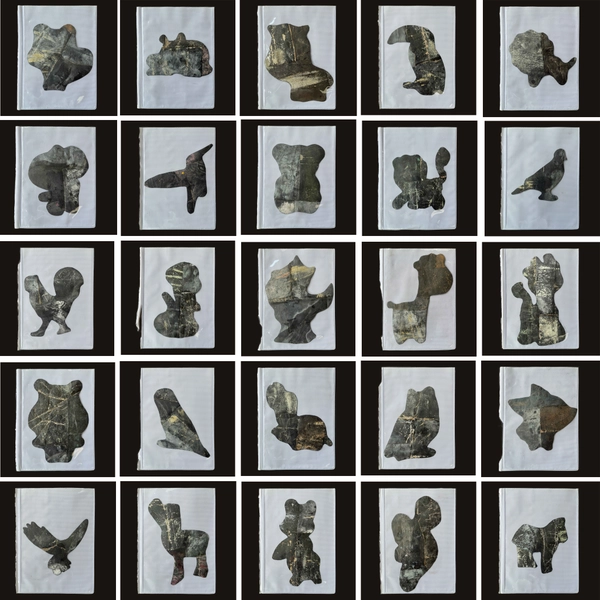
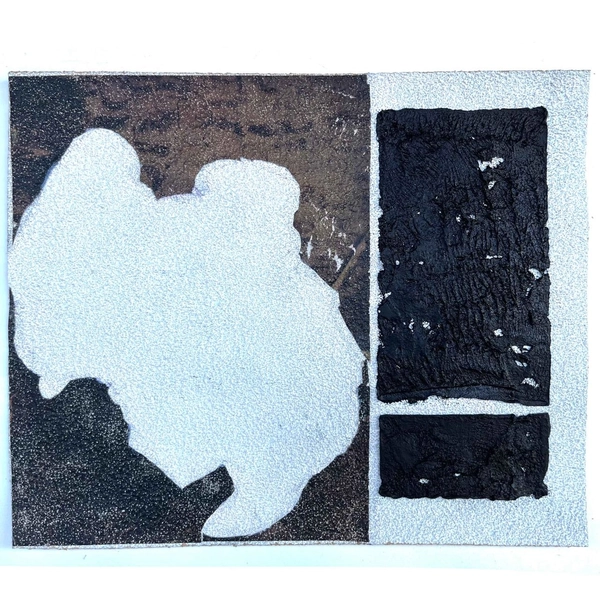
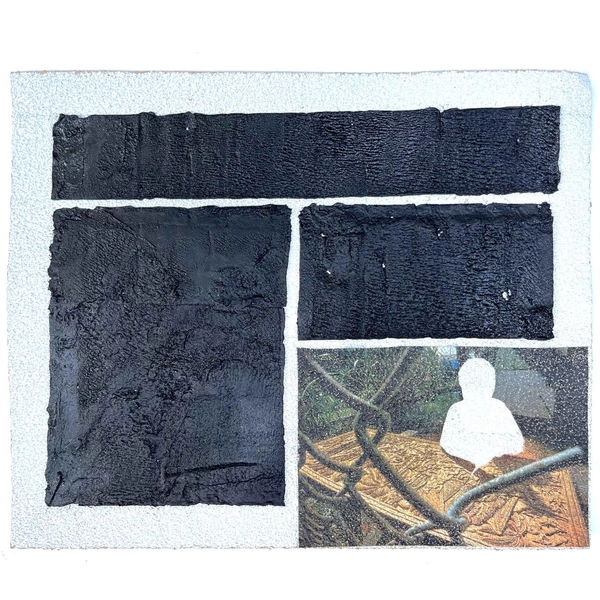
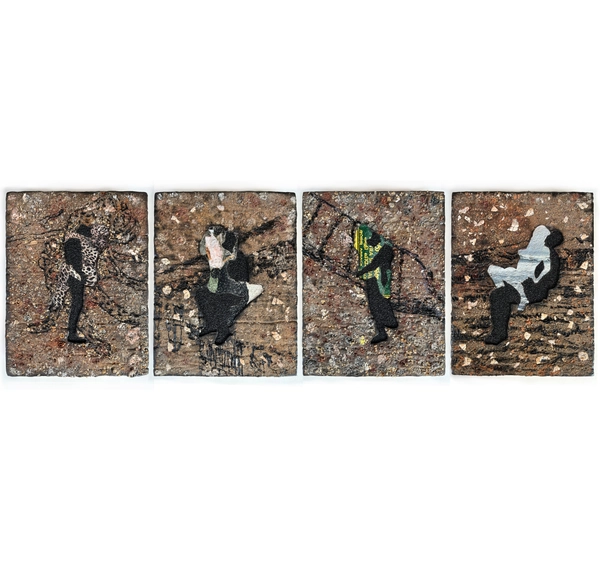
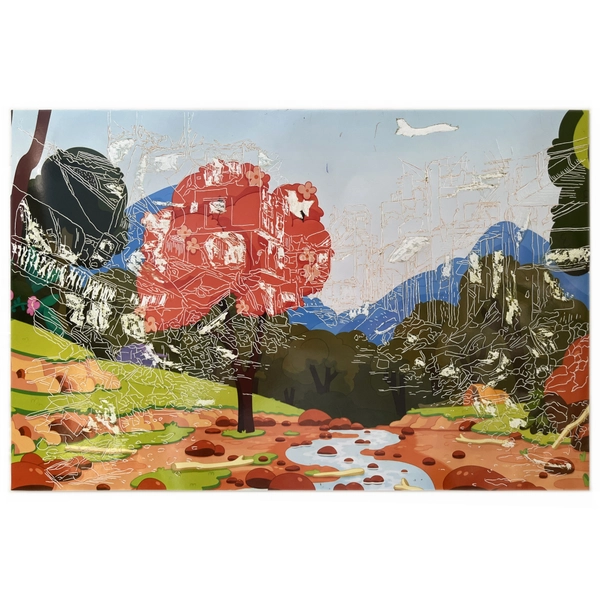
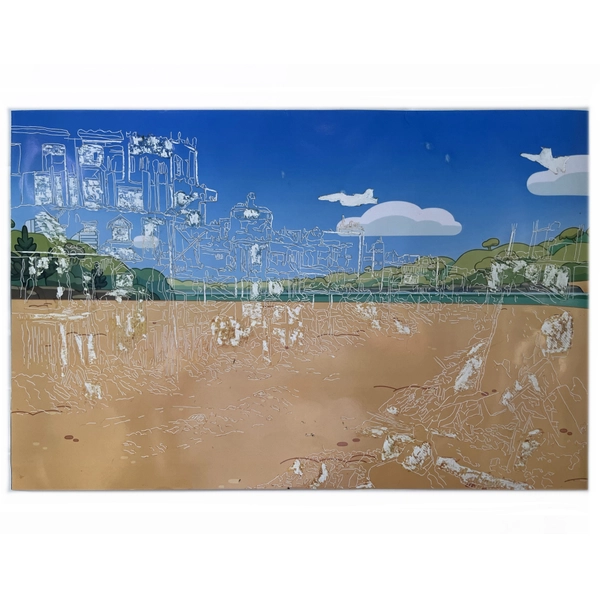
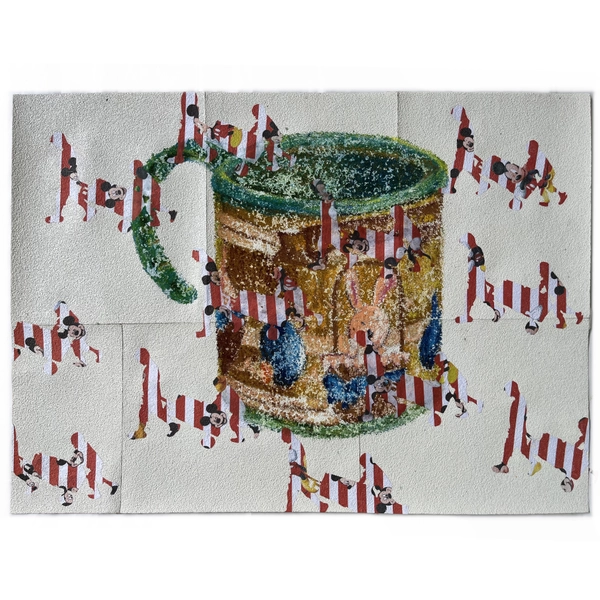
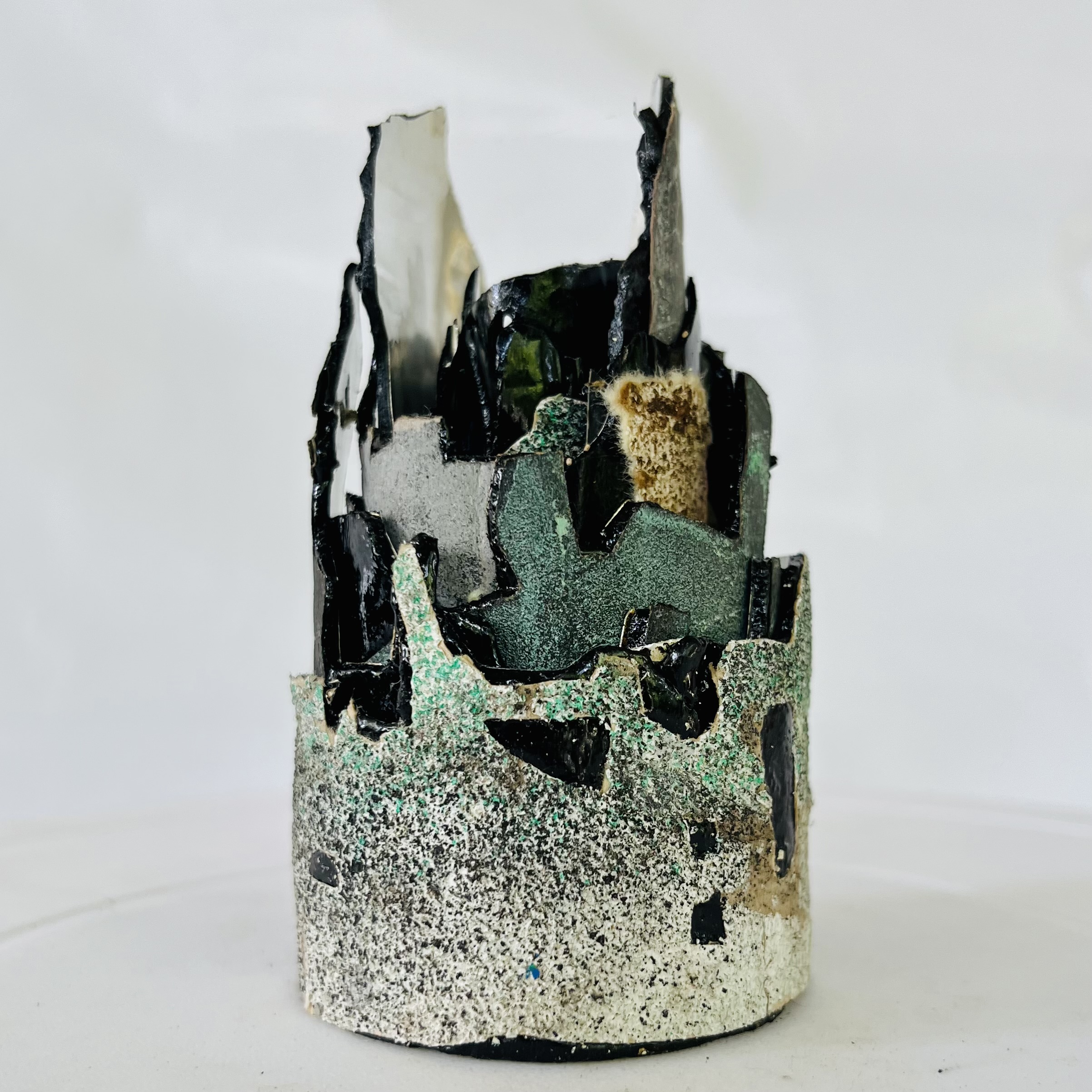
landscape, and my own history. This exhibition explores that overlap. Working with used sandpaper, tar, wrapping paper, children’s sticker cards, photographs, and everyday domestic objects, I treat materials as carriers of memory. The used sandpaper already holds dust, paint, and traces of construction; tar recalls roads, smoke, burnt ground, and transformation. Rather than simply depicting images of war, I allow these materials to absorb
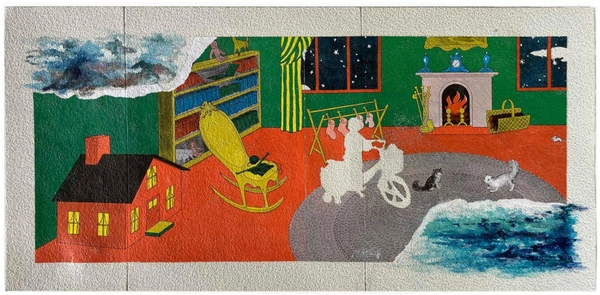
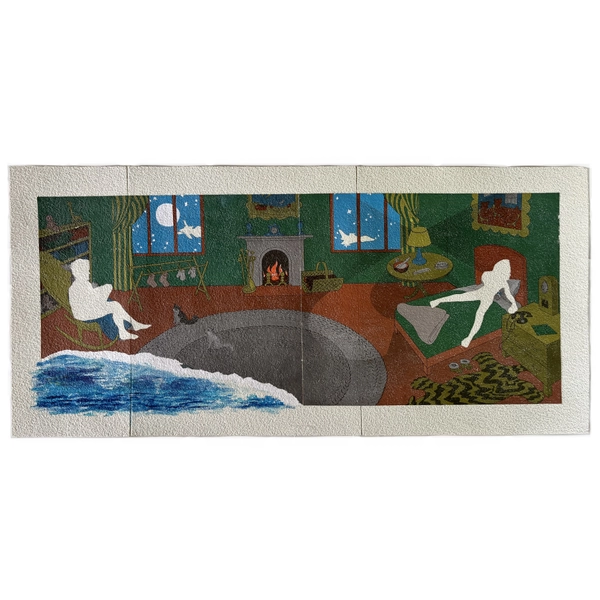
and translate the visual language of the daily news into the language of painting and sculpture. Becoming a father has changed the way I look at these images. My daughter’s books, cartoons, toys, and drawings are filled with hope, colour, and play. Yet, at the same time, I encounter photographs of children whose lives have been shaped by conflict, displacement, and loss. The distance between these two worlds becomes increasingly difficult to maintain. I begin to imagine my child within someone else’s landscape, and someone else’s child within my own. Throughout this exhibition, landscapes are folded, rolled, burnt, layered, archived, and reconstructed. Childhood is imagined through adult eyes, while distant places become inseparable from intimate spaces. These works are not about illustrating war; they are about questioning how images travel across borders and settle within us. They ask how memory is formed, how empathy is constructed, and how places we have never known become landscapes we carry. In the end, these works suggest that no landscape belongs to one place alone. Every remembered horizon, every image, every child’s dream, and every distant tragedy becomes part of a shared visual world that we continue to carry with us.
CURATORIAL NOTE
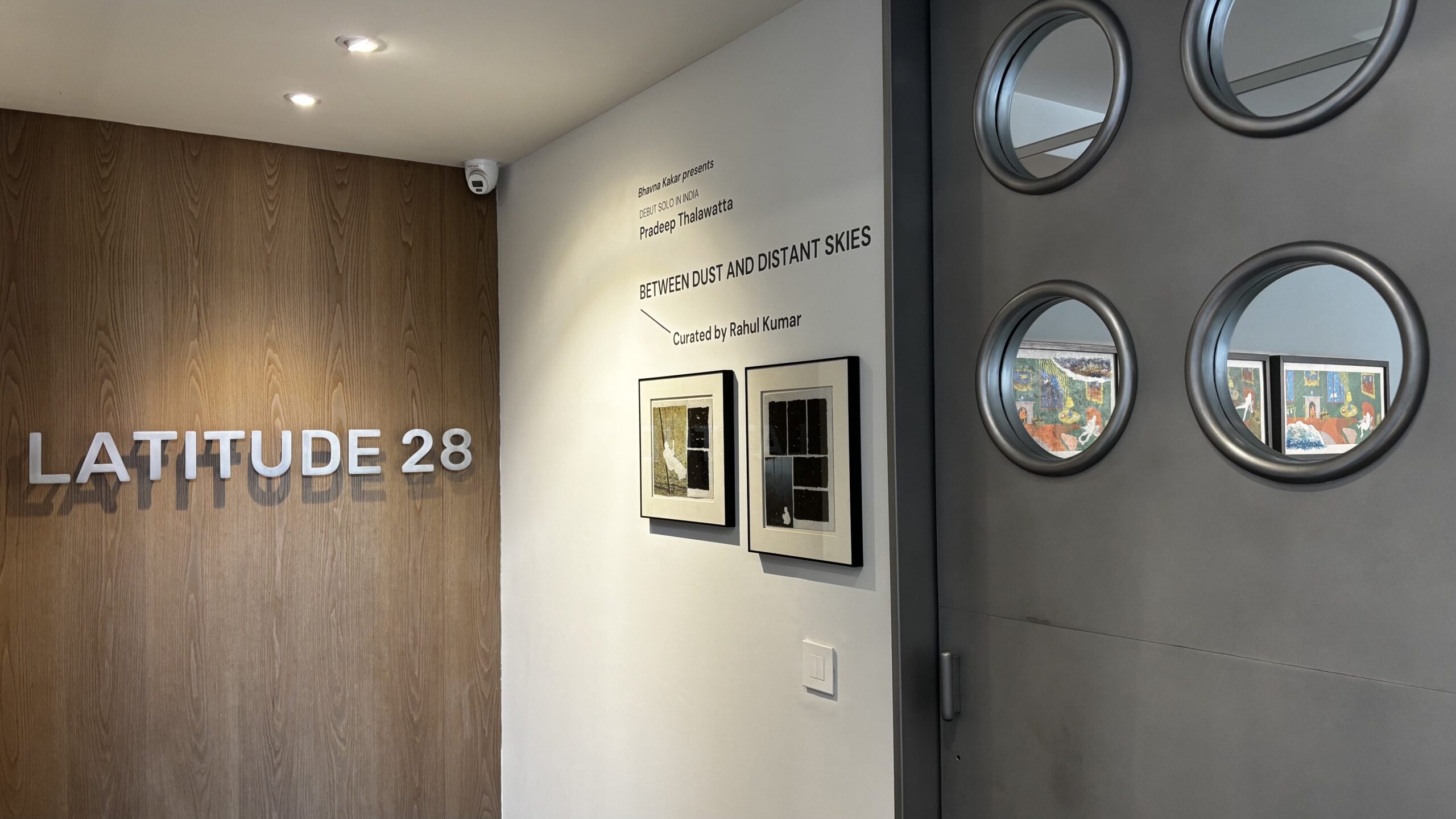
Between Dust and Distant Skies
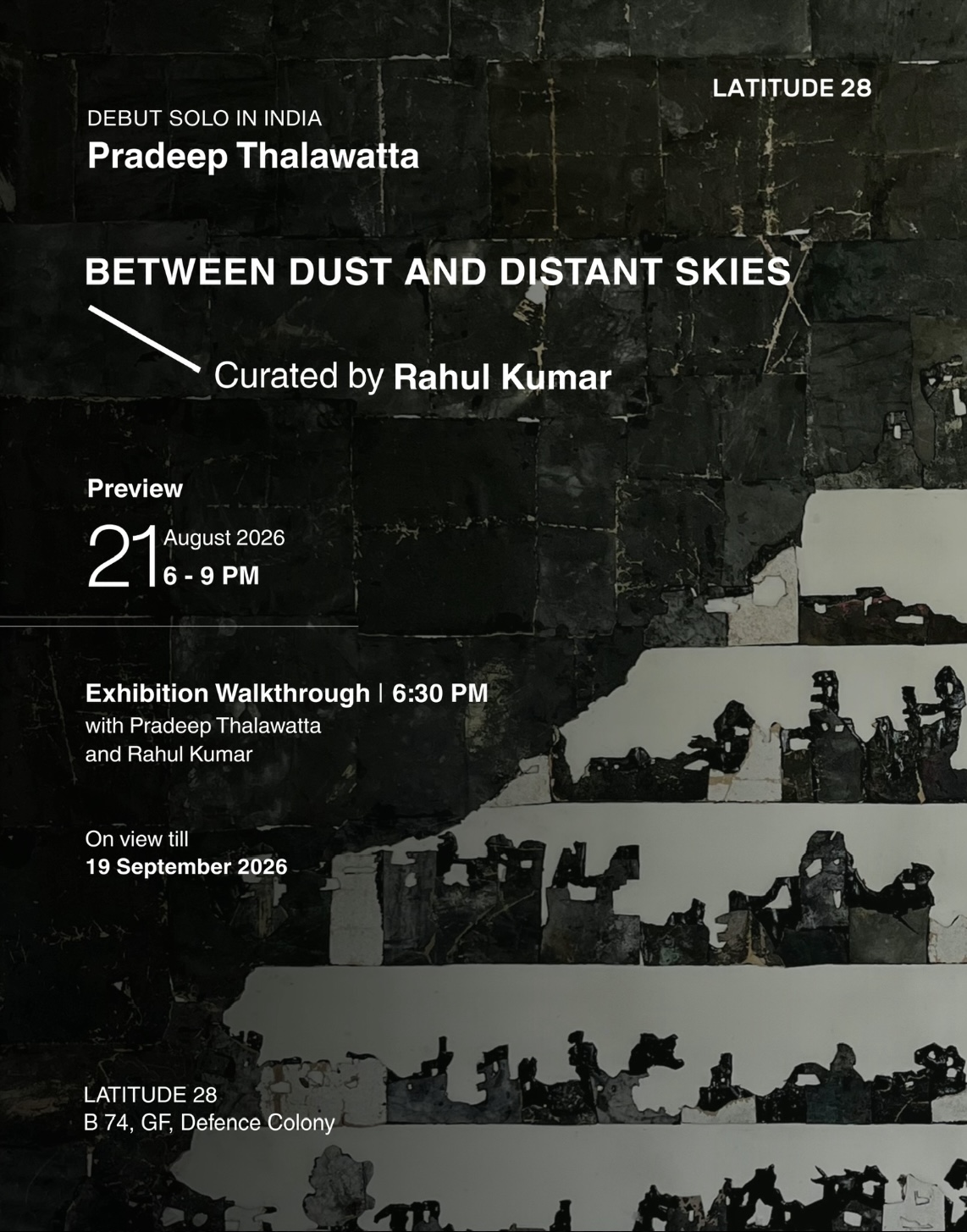
Debut solo show of Pradeep Thalawatta in India; Latitude 28
Curated by Rahul Kumar
The contemporary image rarely remains where it originates. Photographs of conflict, migration,
celebration, disaster, and everyday life circulate endlessly across newspapers, television screens,
and digital feeds, dissolving geographical boundaries as they enter the private spaces of our
homes. They are consumed alongside family photographs, children’s books, advertisements,
and personal archives until the distinction between lived experience and mediated experience
begins to blur. This exhibition inhabits precisely this unstable territory, asking what happens
when distant events cease to be distant and instead become part of our emotional and visual
vocabulary.
Rather than treating images as documentary evidence, Pradeep Thalawatta approaches them as
accumulations that sediment within memory. The exhibition suggests that memory is not a fixed
archive but an active process of layering and editing. Images encountered through the daily
news gradually coexist with intimate domestic experiences, producing a shared visual landscape
where personal histories and global events continuously intersect. This is not an exhibition
about witnessing war from afar; it is about the subtle ways in which repeated acts of looking
reshape our understanding of home, childhood, and belonging.
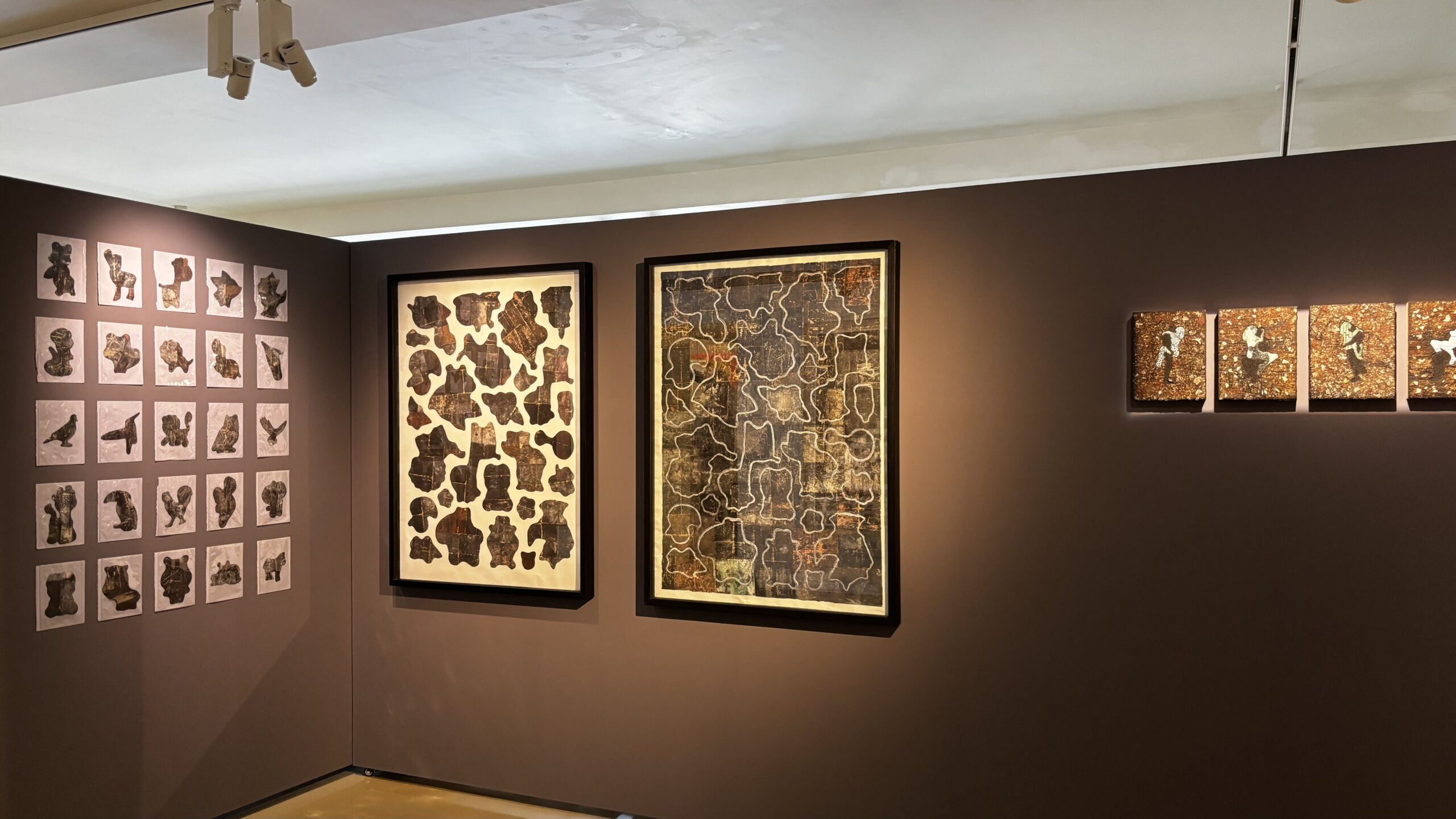
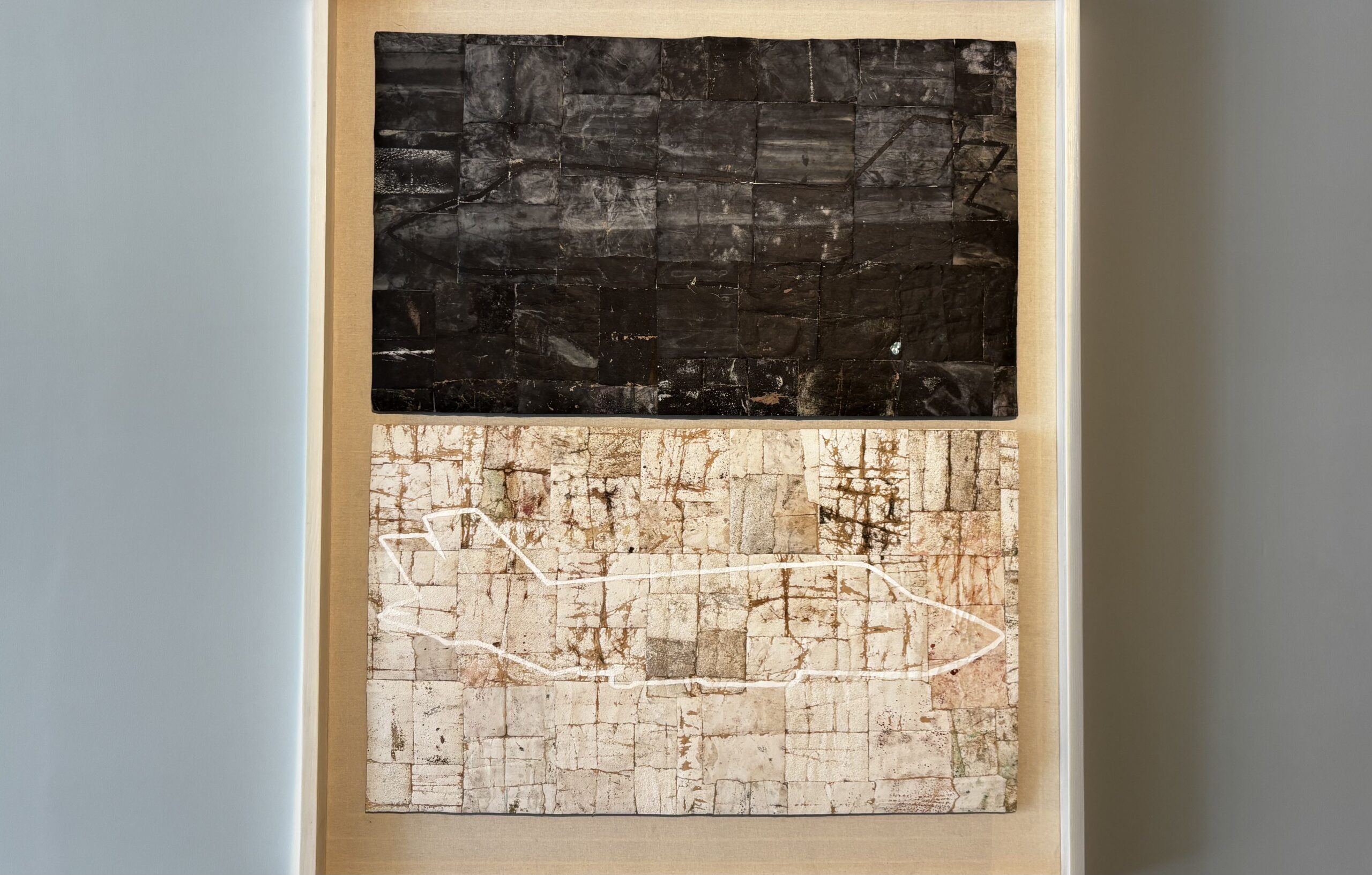
Central to this inquiry is his sustained engagement with material. Every surface employed in the
exhibition arrives carrying a previous life. Used sandpaper, collected from construction sites,
retains embedded dust, pigment, and the physical evidence of abrasion. Its worn surface
becomes both image and archive, suggesting that memory itself is produced through friction
rather than preservation. Instead of functioning merely as a support for painting, the material
actively participates in the formation of the image, reminding us that histories are always
embedded within the matter that survives them. Tar introduces another powerful register.
Historically associated with roads, repair, industry, and combustion, it occupies an ambiguous
space between creation and destruction. Its dense black surface evokes geological depth as
readily as scorched terrain, resisting literal representation while carrying strong sensory
associations. Applied to unprimed canvas, tar refuses the polished finish traditionally associated
with painting. It absorbs light, obscures detail and transforms landscapes into psychological
spaces where memory and imagination become inseparable.
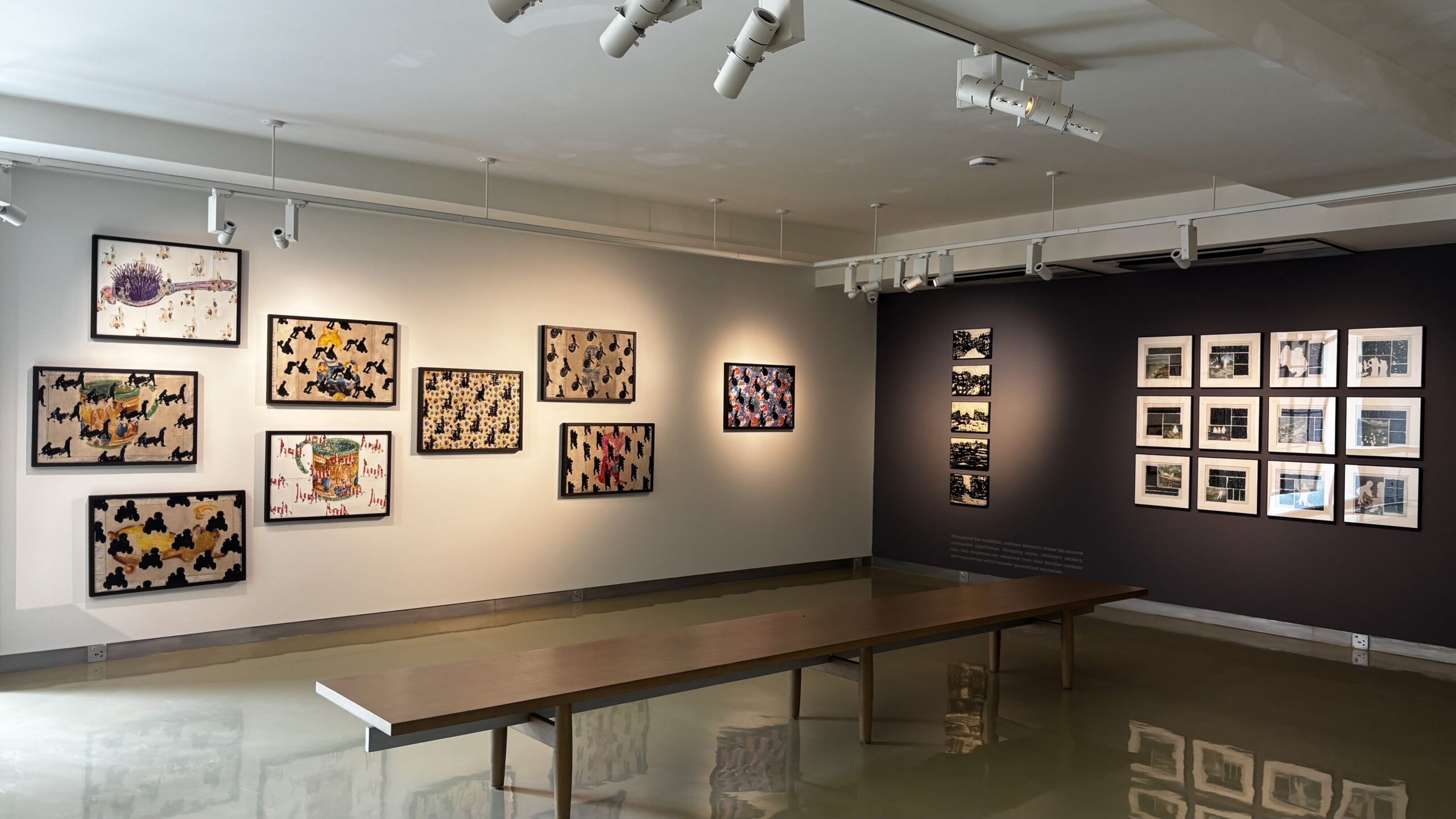
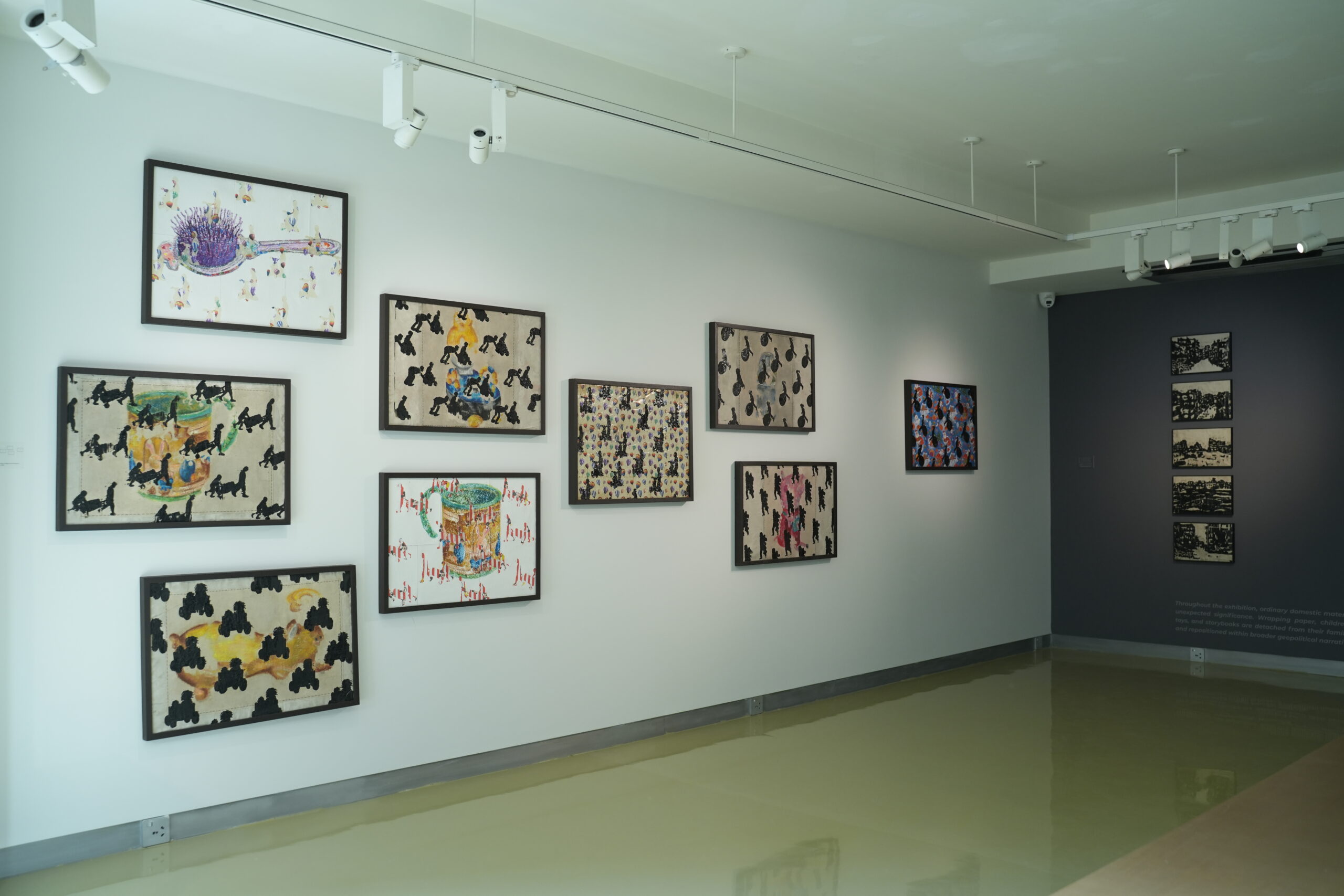
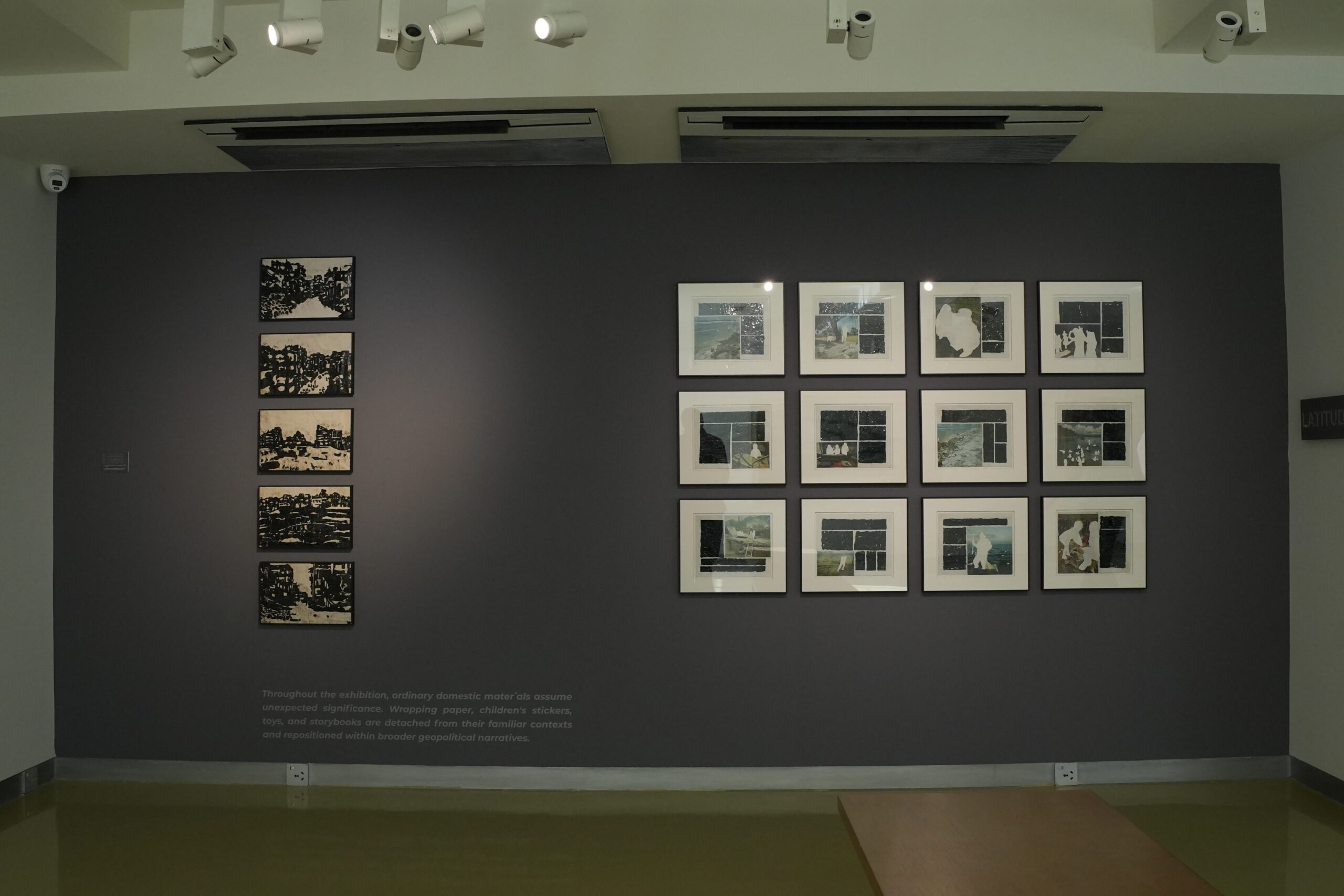
Throughout the exhibition, ordinary domestic materials assume unexpected significance.
Wrapping paper, children’s stickers, toys, and storybooks are detached from their familiar
contexts and repositioned within broader geopolitical narratives. These objects are not
employed for nostalgia alone. Instead, they expose the fragile architecture through which
childhood is imagined and protected. Their familiarity becomes unsettled when placed
alongside references to displacement, conflict and loss, revealing how innocence itself is shaped
by systems of representation.
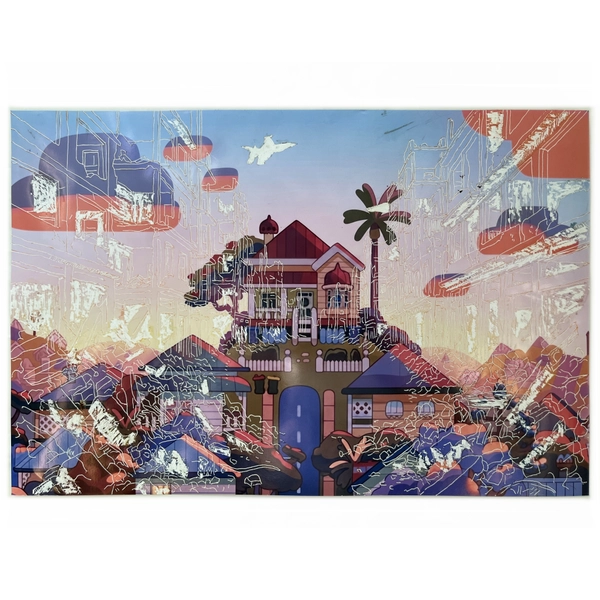
Thalawatta’s use of children’s visual culture is especially compelling. Sticker books, cartoons and
illustrated stories belong to a language of optimism, repetition and play. Yet within these works
they become sites where competing realities converge. Rather than collapsing innocence into
tragedy, the exhibition holds both conditions simultaneously, allowing viewers to recognise the
uncomfortable proximity between protected childhoods and those marked by violence. This
tension gains particular resonance through the artist’s experience of fatherhood, not as
autobiography but as an ethical position from which images are reconsidered. Parenthood
becomes less a subject than a lens through which empathy acquires new urgency.
Art historical references are yet another aspect that layers the exhibition, though never as
quotation for its own sake. Renaissance painting, decorative traditions and devotional imagery
emerge in fragments, entering into conversation with contemporary media images and popular
visual culture. Such references dissolve conventional hierarchies between the museum, the
family archive and the digital screen, suggesting that all images participate in an ongoing
cultural circulation. Historical paintings, children’s illustrations and news photographs are
understood not as separate categories but as interconnected systems through which societies
construct memory, identity and belief. The formal language of the exhibition reinforces these
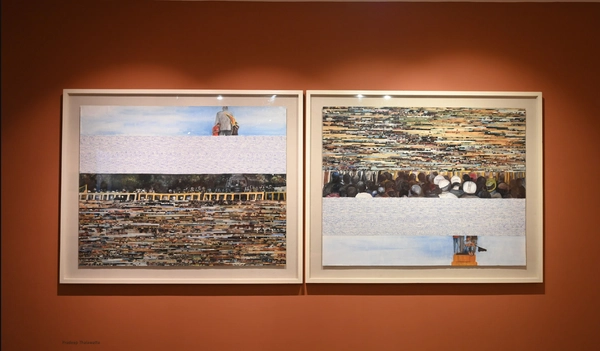
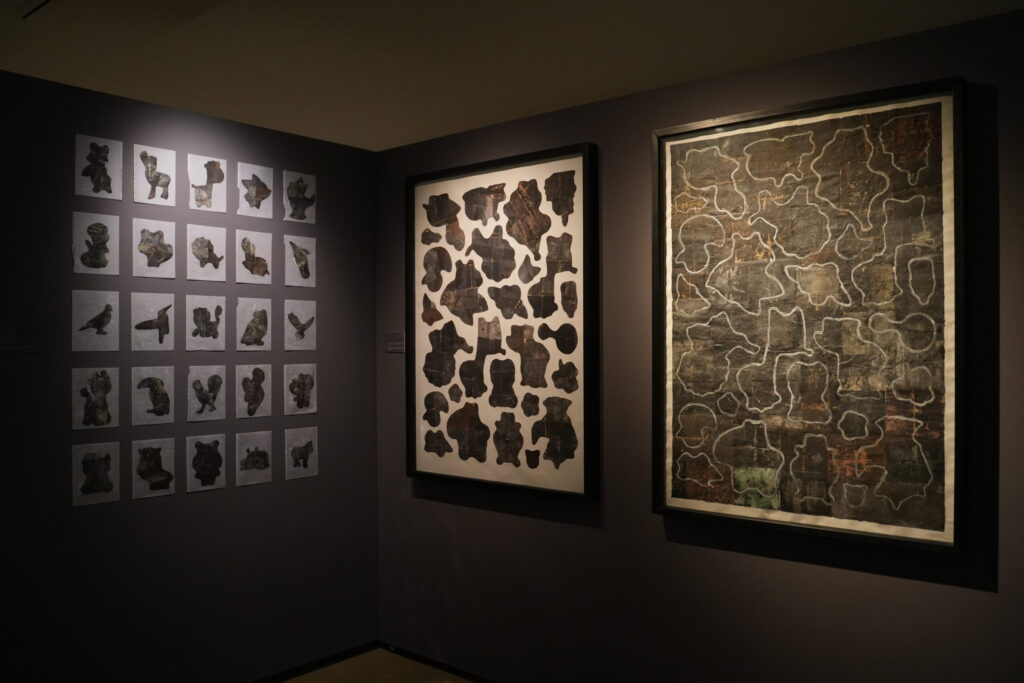
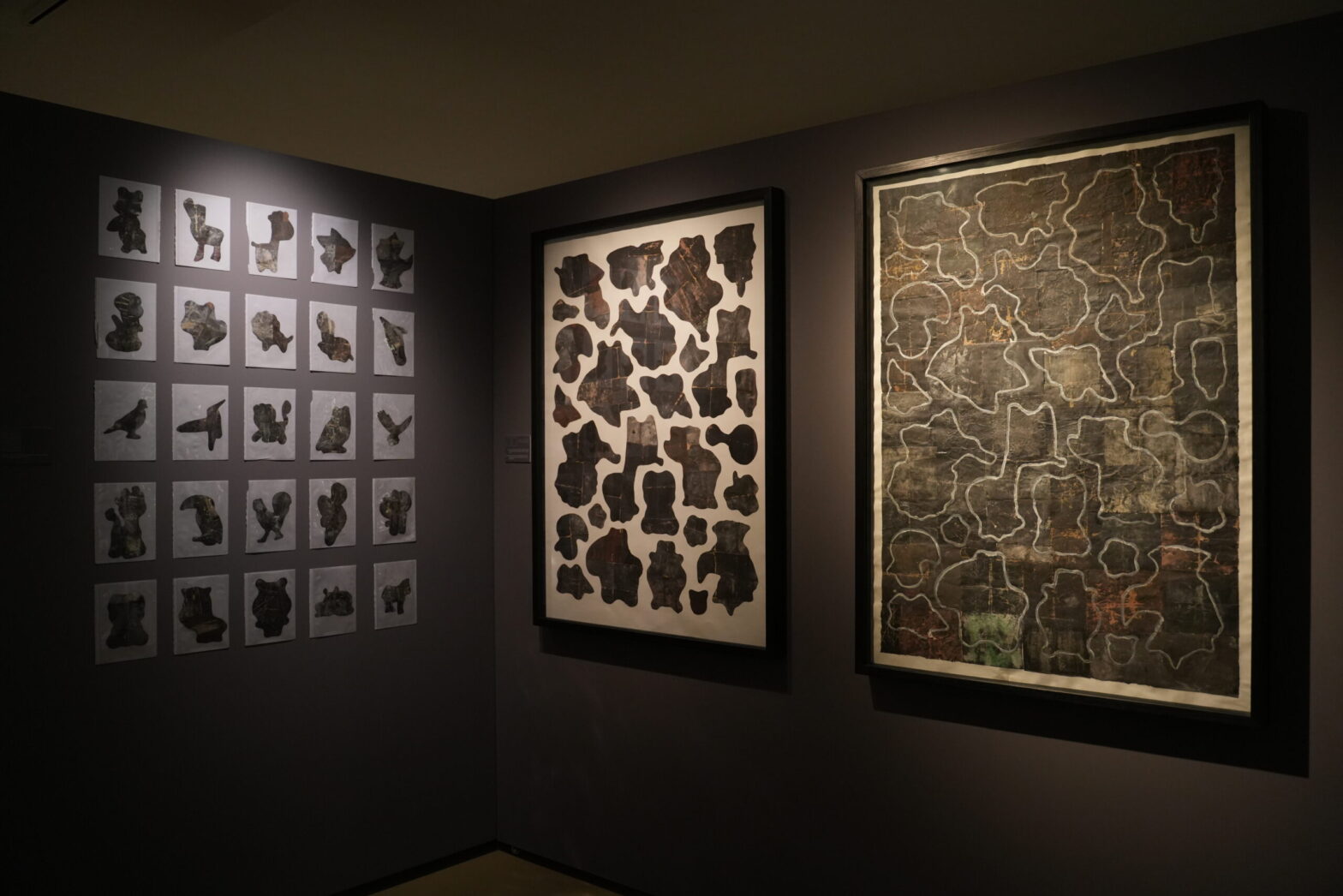
ideas. Images are erased, rolled, folded, layered, and partially concealed. Landscapes become
compressed into sculptural forms, while silhouettes and absences often carry greater emotional
weight than complete representations. Such strategies resist spectacle, refusing the visual
certainty commonly associated with documentary imagery. Instead, the works invite prolonged
attention, asking viewers to navigate fragments, omissions and material traces rather than
singular narratives.
Ultimately, this exhibition proposes that landscapes are never solely geographical. They are
constructed through accumulated encounters, with images, objects, stories and emotions that
continue to travel long after their moment of origin. In bringing together the physical residue of
everyday materials with the relentless circulation of contemporary images, the artist offers a
meditation on how memory is continually built through acts of looking. The result is an
exhibition that quietly dissolves the distance between here and elsewhere, reminding us that
every image we absorb has the potential to become part of the landscape we carry within
ourselves.
INSTALLATION VIEWS

SELECTED WORKS
Pradeep Thalawatta