The Friend That I Never Had
Apr 7, 2026 - Apr 28, 2026
- SELECTED WORKS
- CURATORIAL NOTE
- INVITE
- PRESS RELEASE
- DOWNLOAD CATALOGUE
THE FRIEND THAT I NEVER HAD
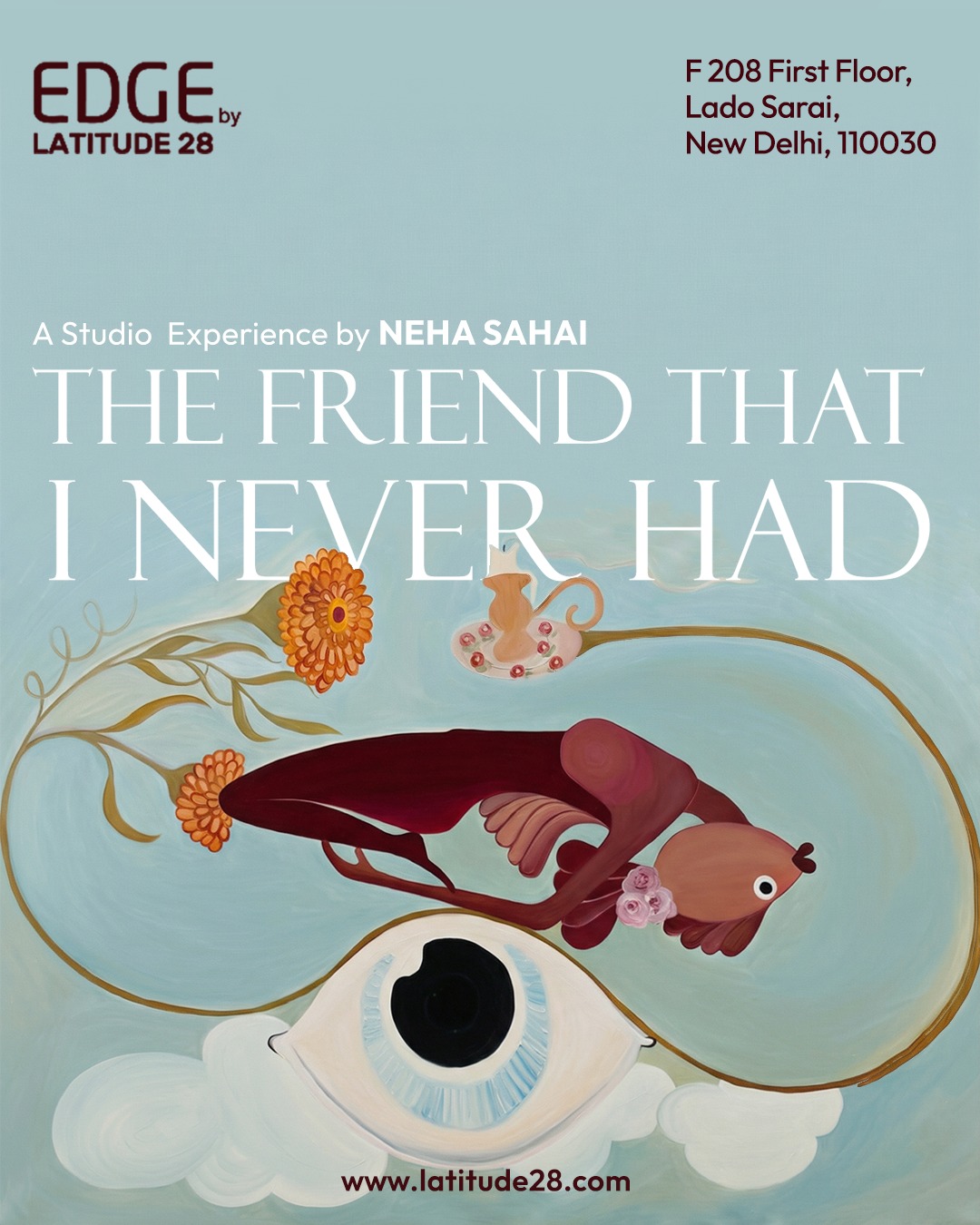
A Studio Experience by Neha Sahai
APR 7, 2026 – APR 28, 2026
Neha Sahai’s practice engages painting as a space where autobiography, memory, and imagined forms of relation converge. Her current exhibition, The Friend That I Never Had, unfolds through a sustained enquiry into intimacy and the forms companionship takes when it cannot be fully realised within the structures of everyday life.
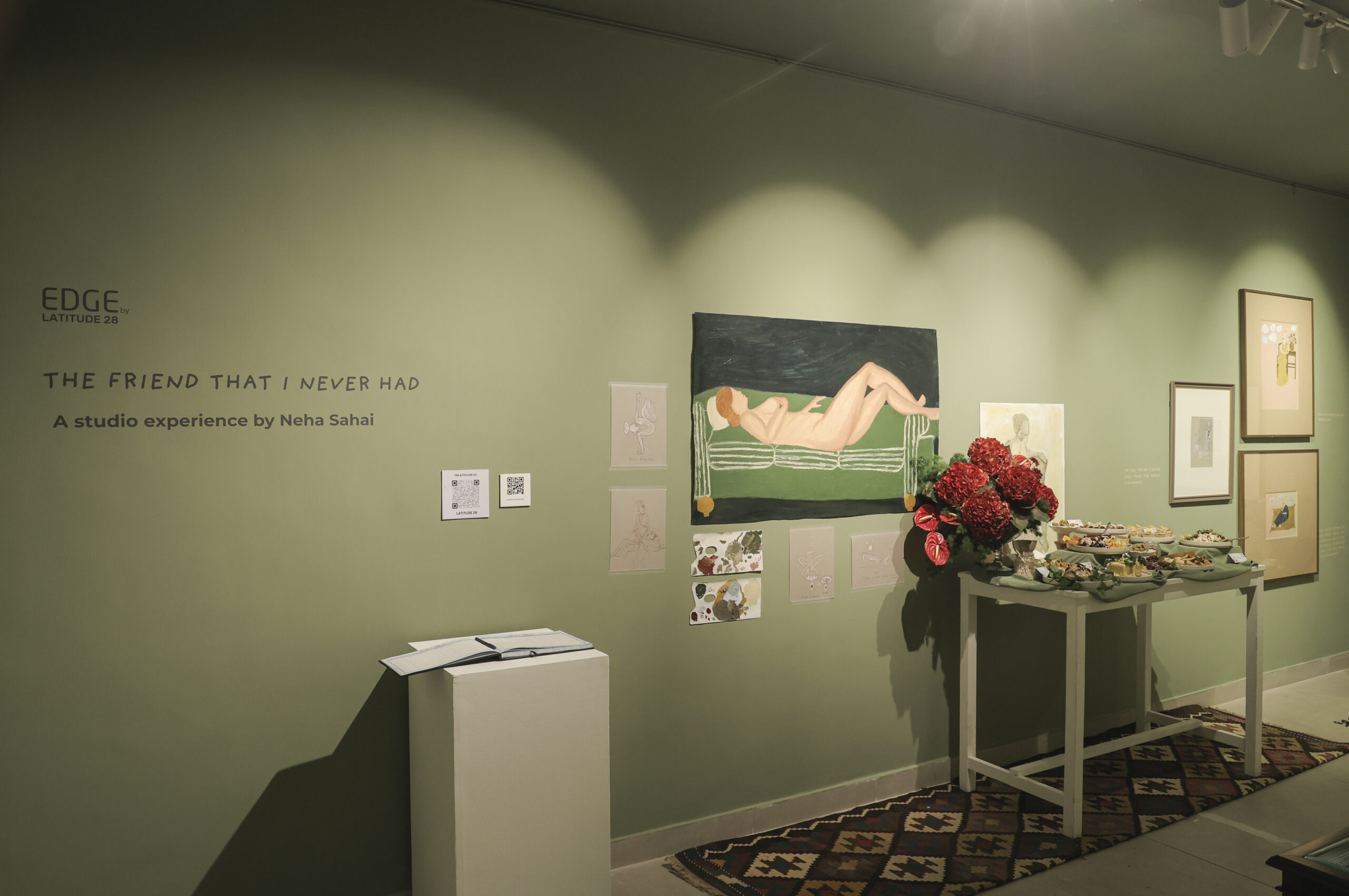
This project marks the inaugural exhibition of EDGE by LATITUDE 28, a new vertical and project space located in Lado Sarai, New Delhi. EDGE is dedicated to process-led and exploratory practices across contemporary art and heritage. Conceived as a fluid and accessible platform, it brings together artists, designers, architects, and thinkers whose work pushes beyond the conventional limits of gallery space. Dynamic, open, and culturally engaged, EDGE aims to create new entry points for younger collectors and art enthusiasts through exhibitions that are thoughtful, visually compelling, and responsive to how contemporary culture is shaped today.
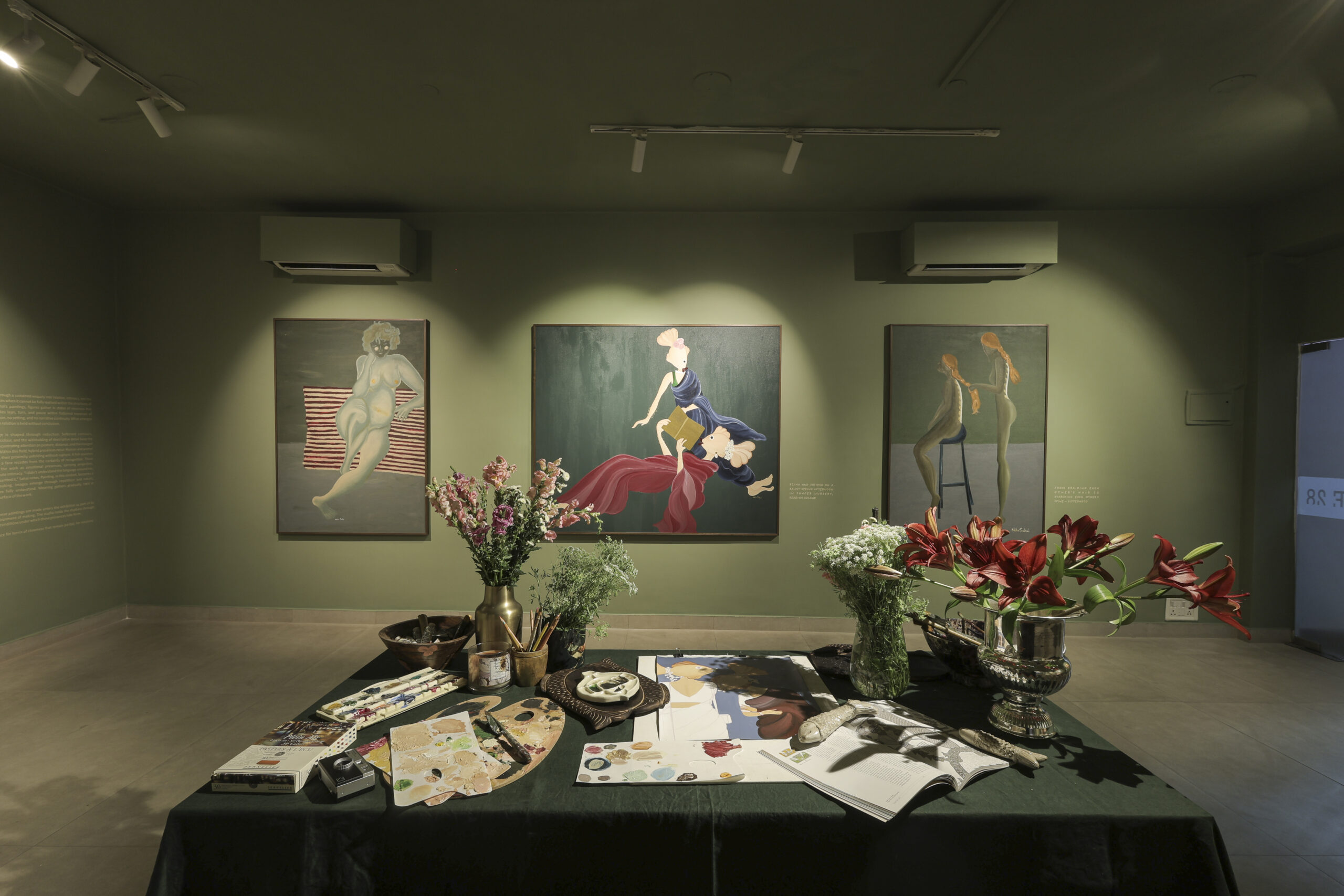
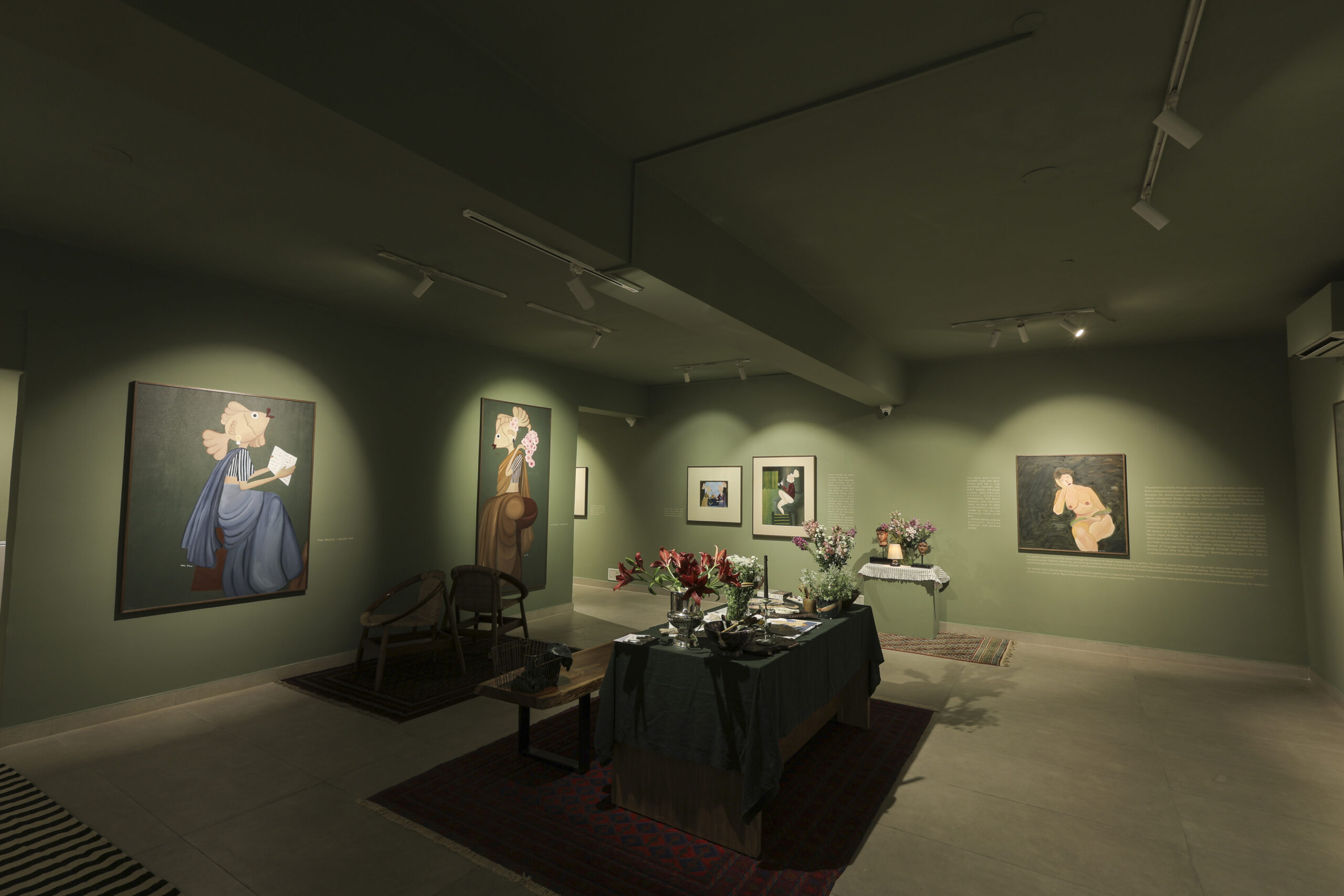
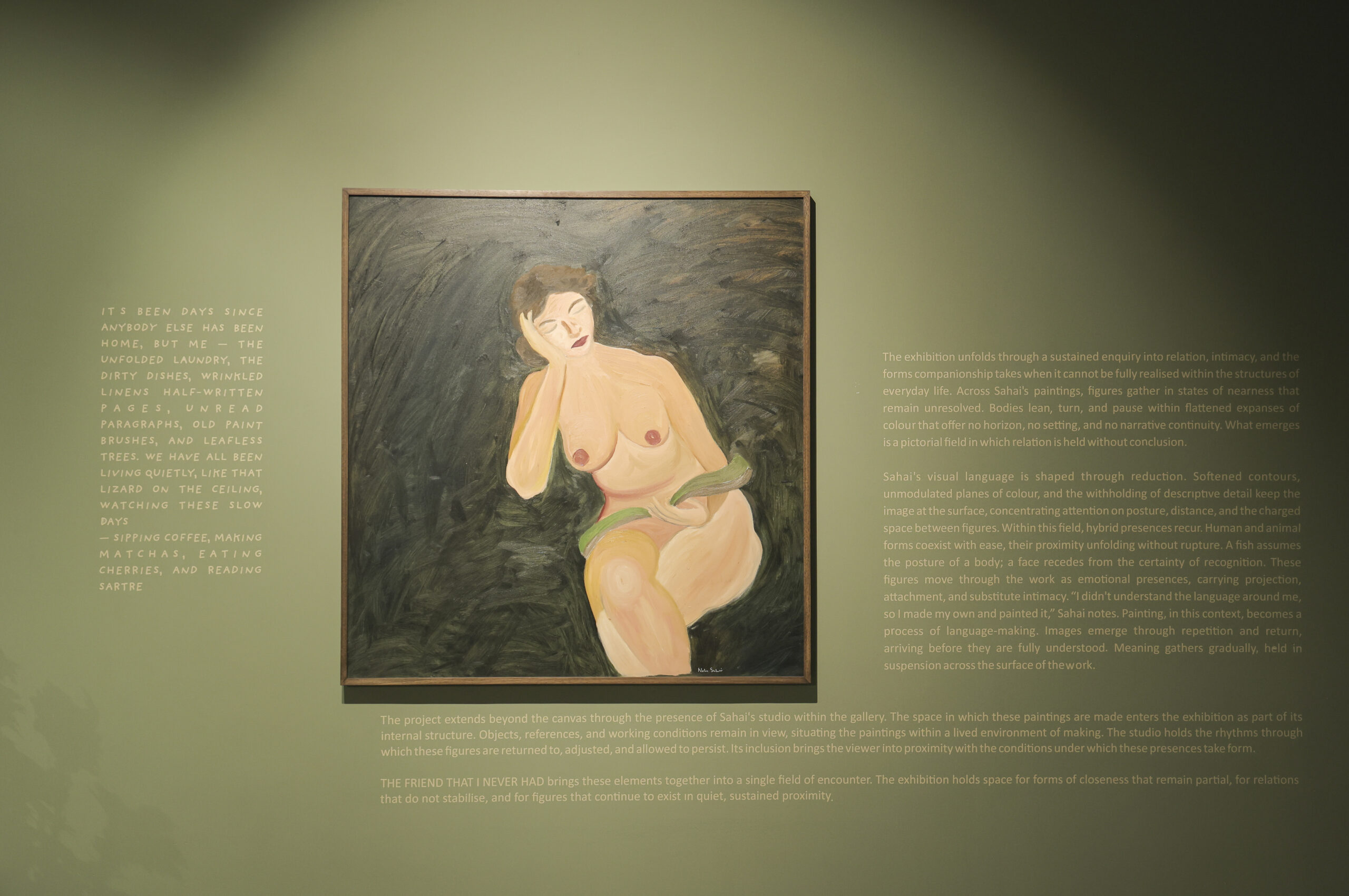
The Friend That I Never Had offers an early glimpse into the sensibility EDGE hopes to cultivate—intimate, process-led, and open to exhibitions that bring viewers closer to the life of a practice. Across Sahai’s paintings, figures gather in states of nearness that remain unresolved. Bodies lean, turn, and pause within flattened expanses of colour that offer no horizon, no setting, and no narrative continuity. What emerges is a pictorial field in which relation is held without conclusion.
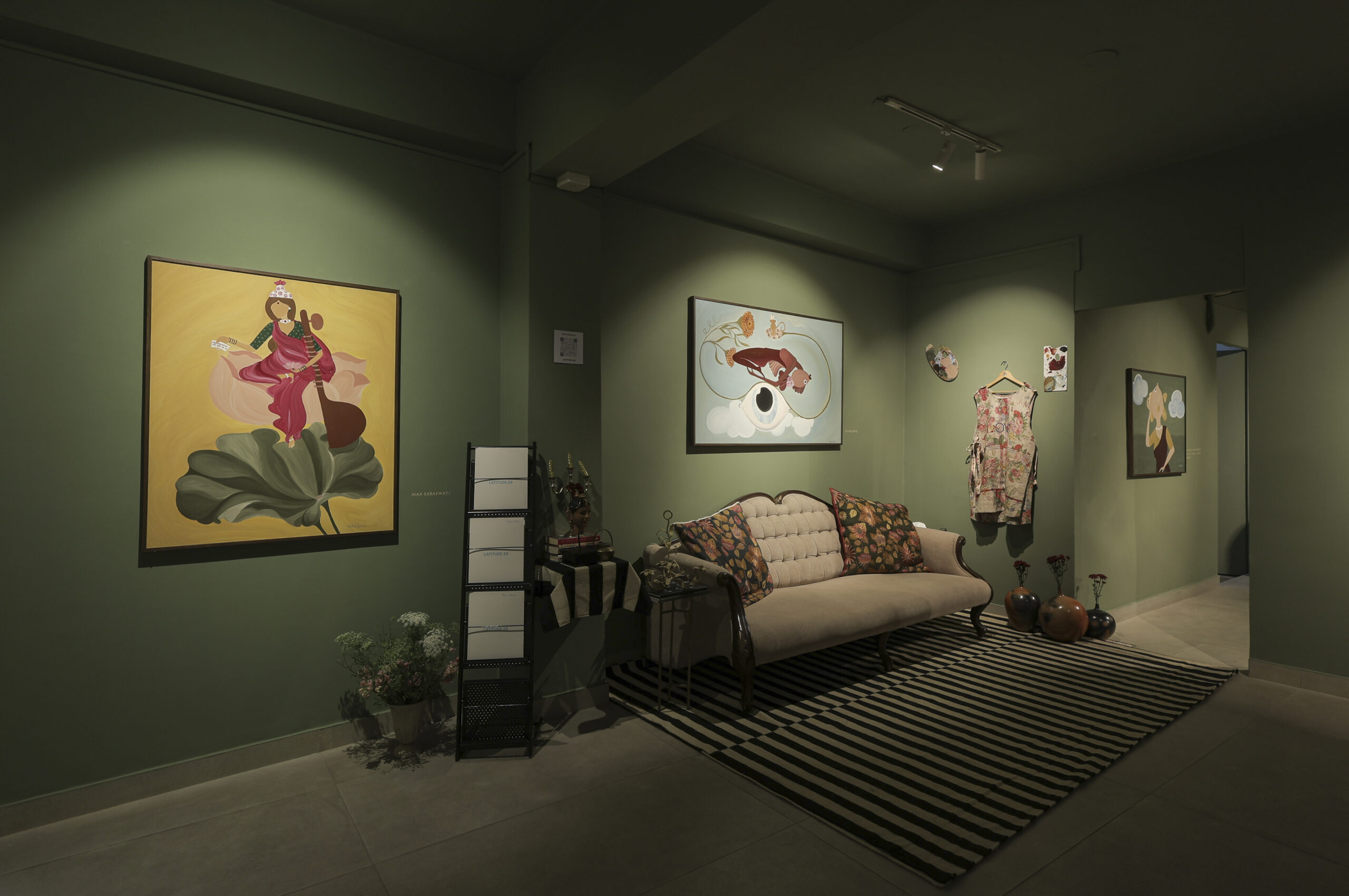
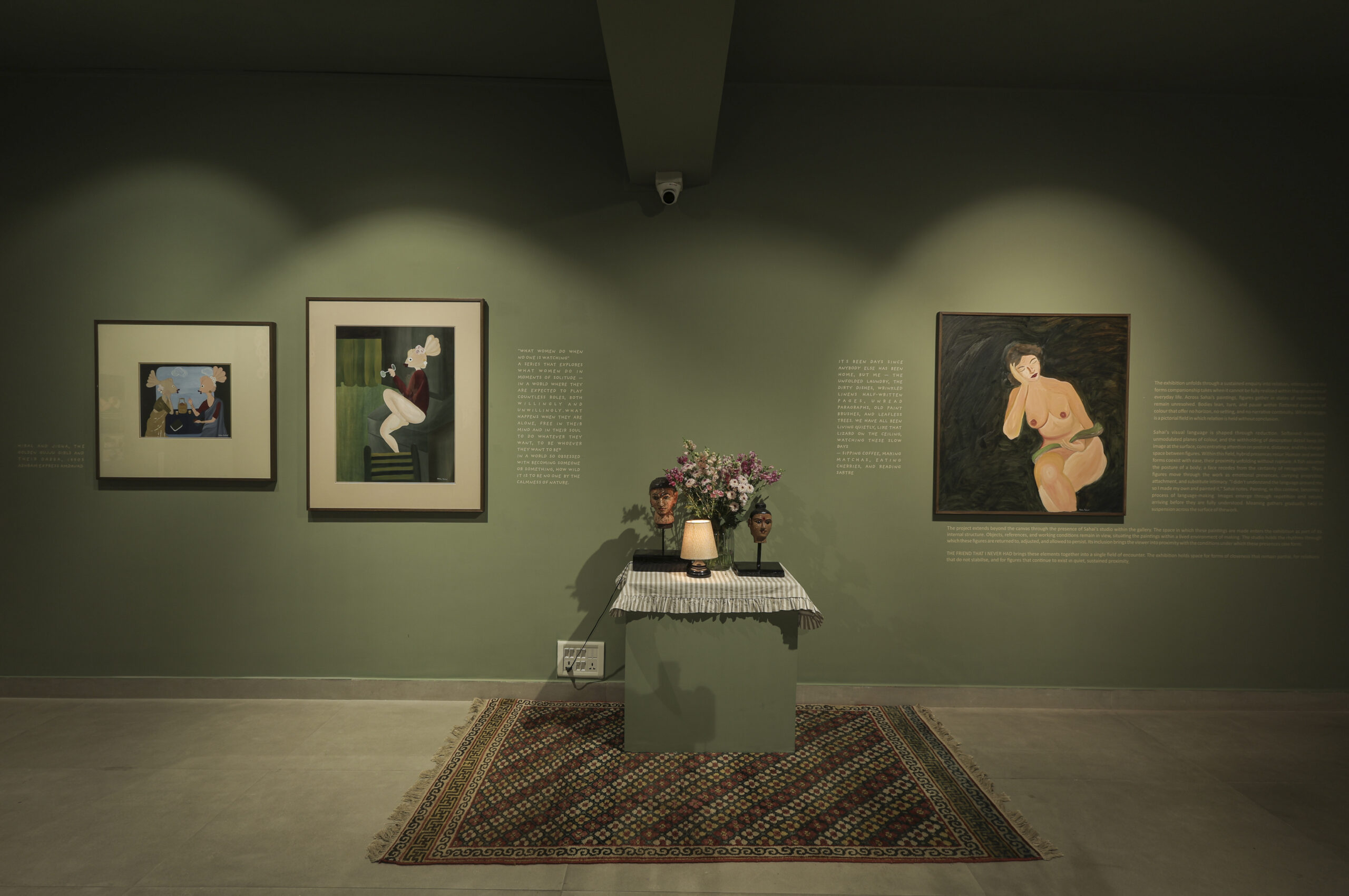
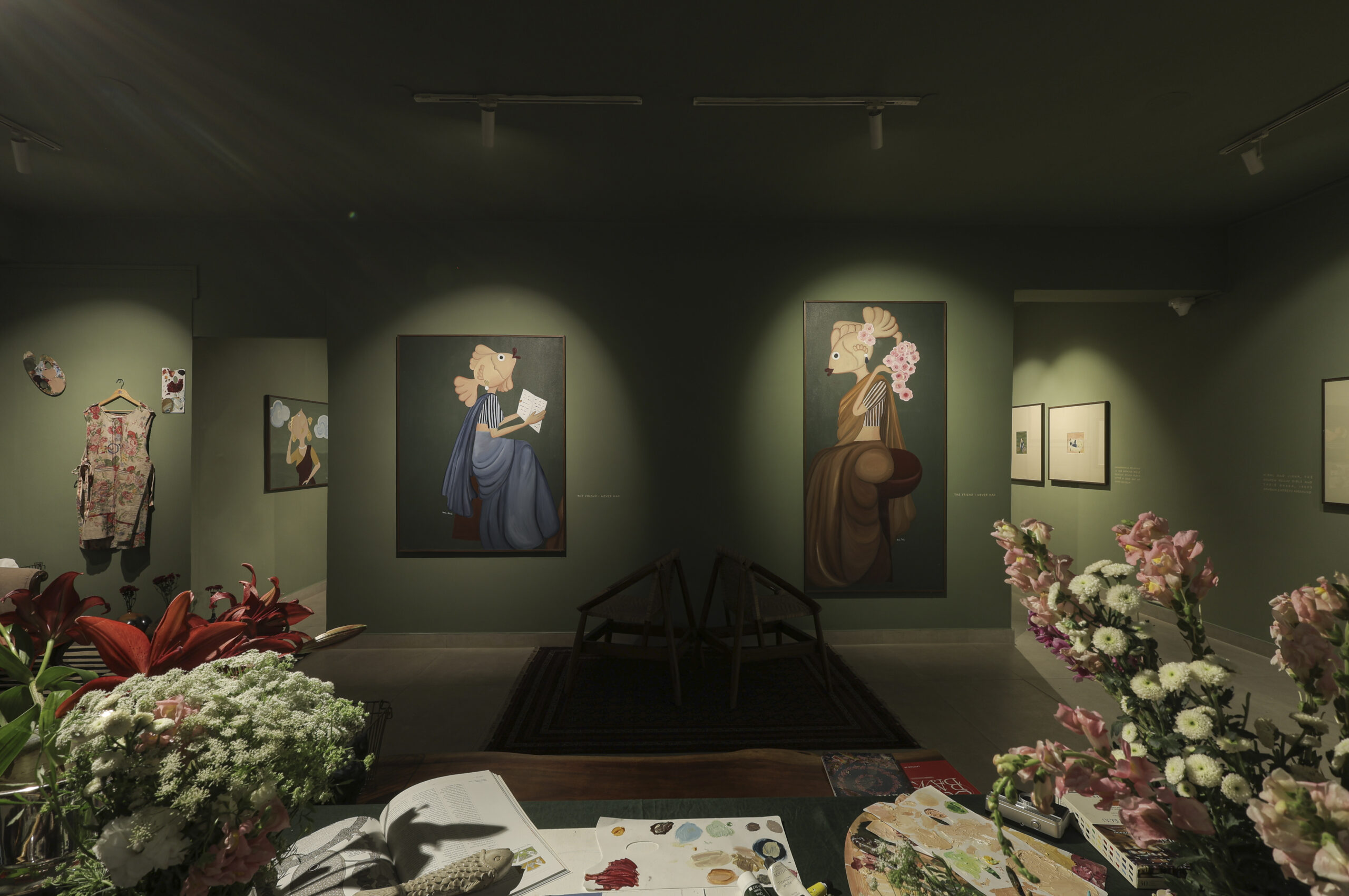
Sahai’s visual language is shaped through reduction. Softened contours, unmodulated planes of colour, and the withholding of descriptive detail keep the image at the surface, concentrating attention on posture, distance, and the charged space between figures. Within this field, hybrid presences recur; human and animal forms coexist with ease, their proximity unfolding without rupture. A fish assumes the posture of a body; a face recedes from the certainty of recognition. These figures move through the work as emotional presences, carrying projection, attachment, and substitute intimacy.
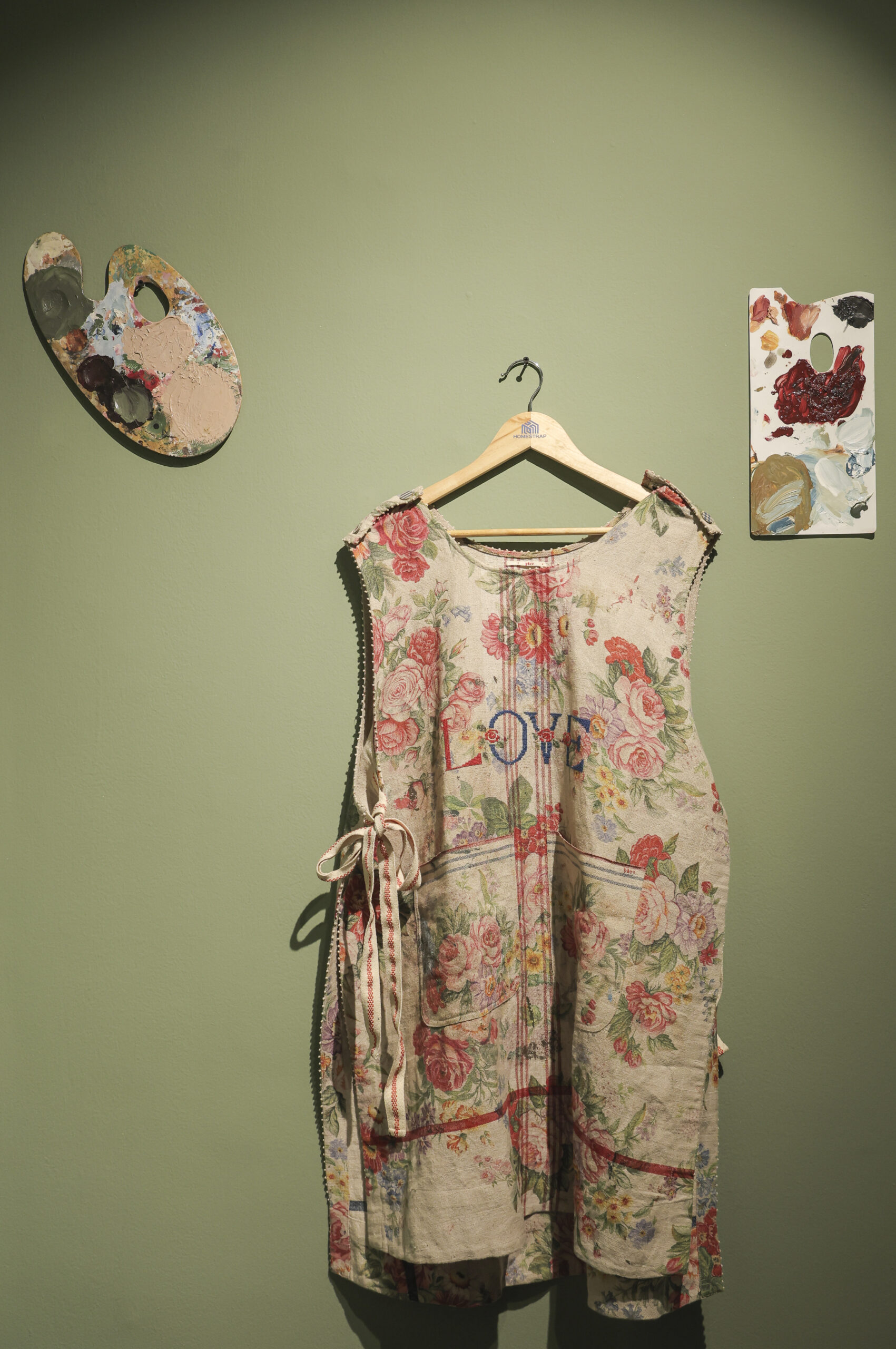
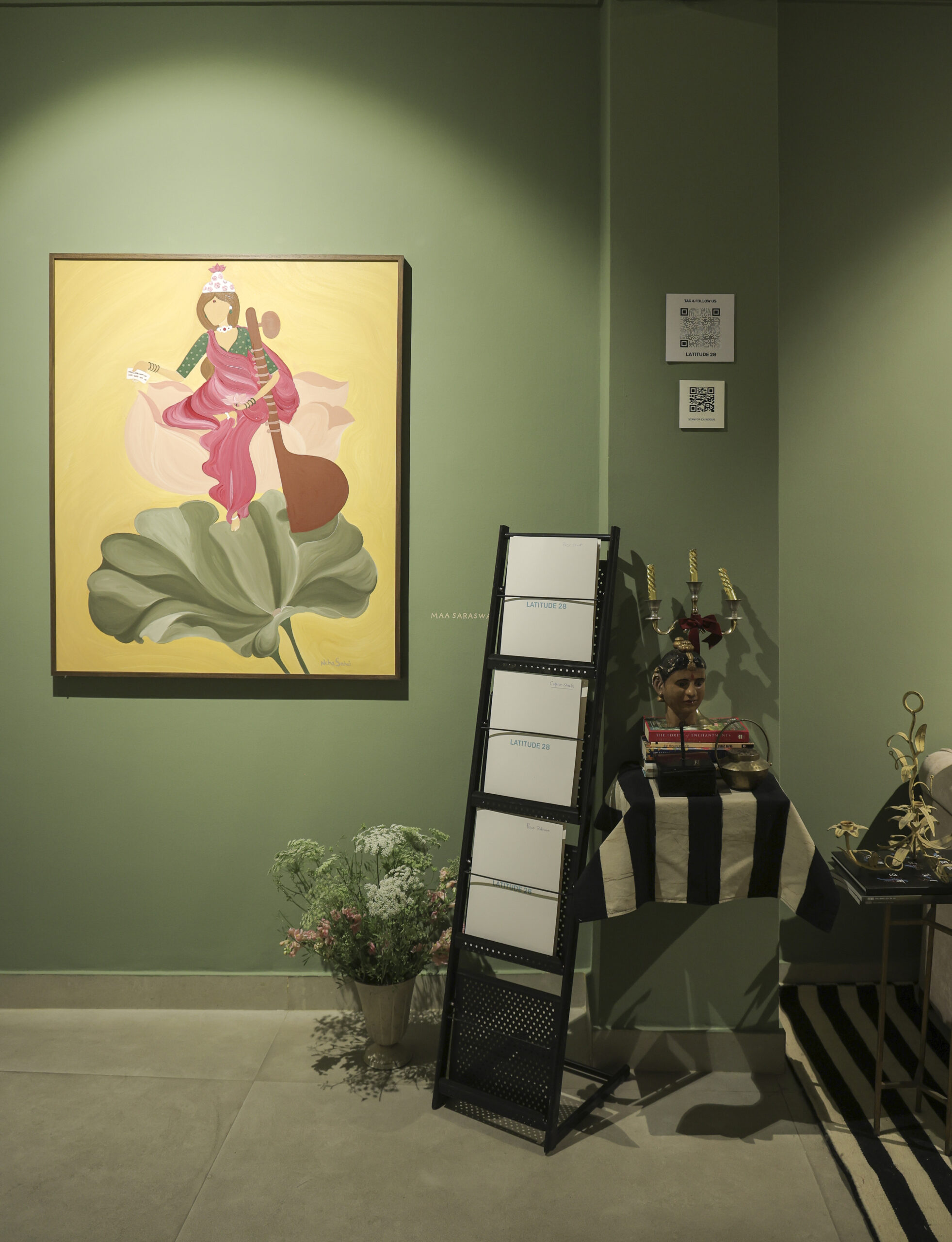
“I didn’t understand the language around me, so I made my own and painted it,” Sahai notes. Painting, in this context, becomes a process of language-making. Images emerge through repetition and return, arriving before they are fully understood. Meaning gathers gradually, held in suspension across the surface of the work. Reflecting the core ethos of EDGE, the project extends beyond the canvas through the presence of Sahai’s studio within the gallery. The space in which these paintings are made enters the exhibition as part of its internal structure. Objects, references, and working conditions remain in view, situating the paintings within a lived environment of making. The studio holds the rhythms through which these figures are returned to, adjusted, and allowed to persist. Its inclusion collapses the distance between finished work and the space of its making, bringing the viewer into proximity with the conditions under which these presences take form.
THE FRIEND THAT I NEVER HAD brings these elements together into a single field of encounter that feels immersive, immediate, and deeply attuned to the quiet force of making. The exhibition holds space for forms of closeness that remain partial, for relations that do not stabilise, and for figures that continue to exist in quiet, sustained proximity.
CURATORIAL NOTE
The Friend That I Never Had begins with an encounter that feels familiar. In Neha Sahai’s paintings, figures appear in relation, but rarely in contact. A body leans toward another and stops short. A face turns, as in acknowledgement, without meeting a gaze.
Her compositions are stripped of environment. There is no ground line, no horizon, no architecture to stabilise the scene. Figures are held against flattened fields of colour that resisting depth and perspective. These fields do not recede. They press forward, holding the image at the surface. Space becomes continuous, leaving no clear boundary between figure and field.
Within this condition, gesture carries the work. A slight tilt of the head, an extended arm, a curved back, these minimal shifts register relation without completing it. The figures do not fully arrive at one another. They remain suspended in a state of almost-contact, where intimacy is suggested but never secured.
“A world where a fish can fly… where you can be anything, or just be nothing.”
This proposition frames the logic of her figures. Hybrid forms – human, animal, indeterminate appear without rupture. A fish-headed body does not disrupt the image; it settles into it. These are not moments of transformation. They are states that have already taken form. Identity does not fracture here. It loosens, becoming continuous with other bodies, other conditions.
“I didn’t understand the language around me, so I made my own and painted it.”
Sahai’s language is constructed through reduction. Contours are softened, often slightly uneven. Detail is withheld. Colour remains unmodulated, resisting volume and illusion. The image does not open into depth. It stays at the surface, where meaning does not stabilise and recognition remains partial.
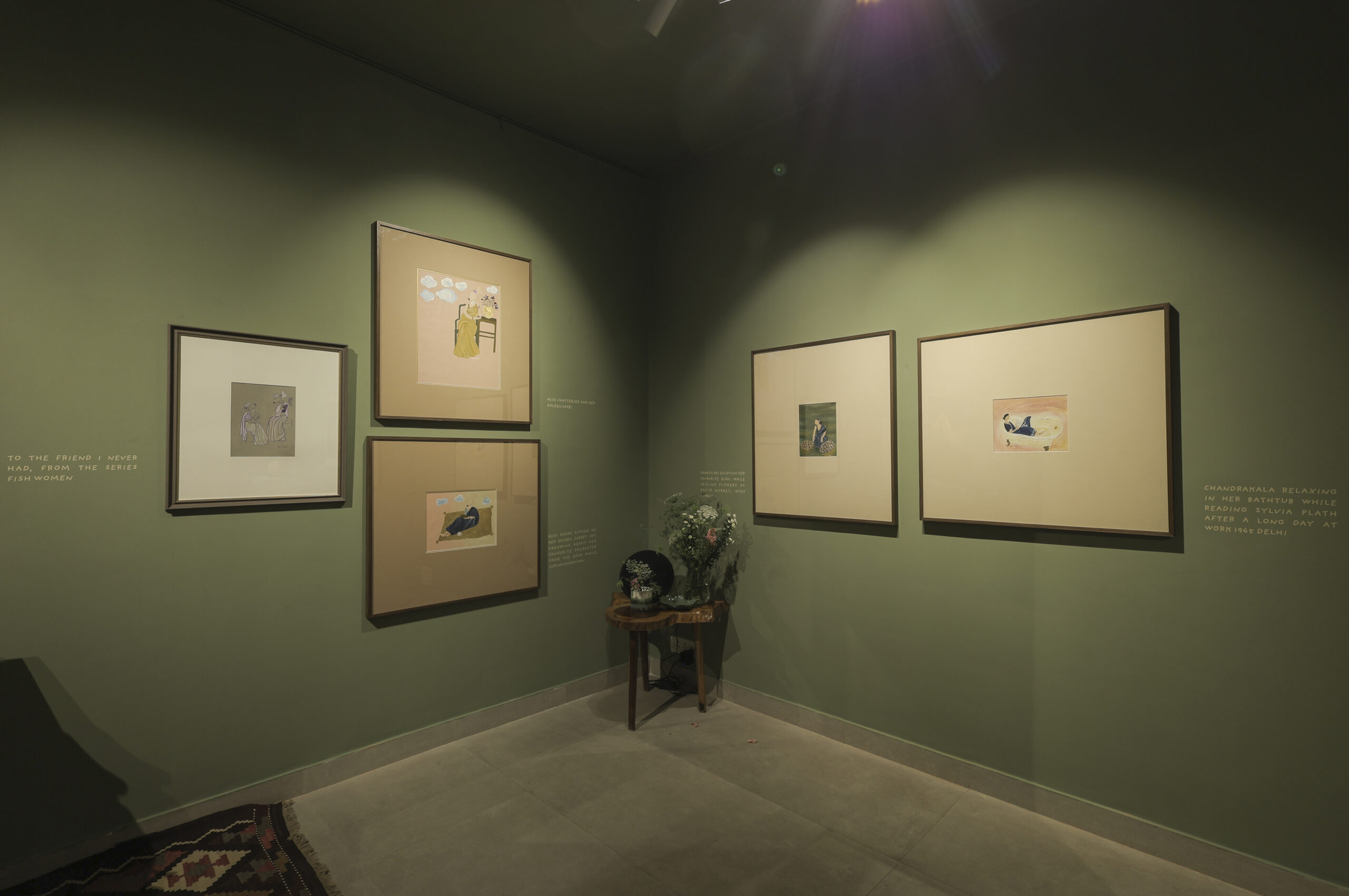
Across the works, figures recur in shifting configurations. A pair becomes a solitary figure. A solitary figure becomes a cluster. The distance between them changes, but the condition persists. There is no narrative progression, no resolution. What emerges is a rhythm of return – each image holding a variation of the same unresolved relation.
To remain with these paintings is to enter a space where companionship is both present and withheld. The figures do not fully belong to one another, nor do they detach. They exist alongside, within reach, but never entirely accessible.
The Friend That I Never Had considers this space of relation as something both constructed and felt. The works do not offer completion. They hold a form of proximity that remains unfinished—where connection is sensed, but never fully secured, and where the self encounters what it cannot entirely contain.
INSTALLATION VIEWS