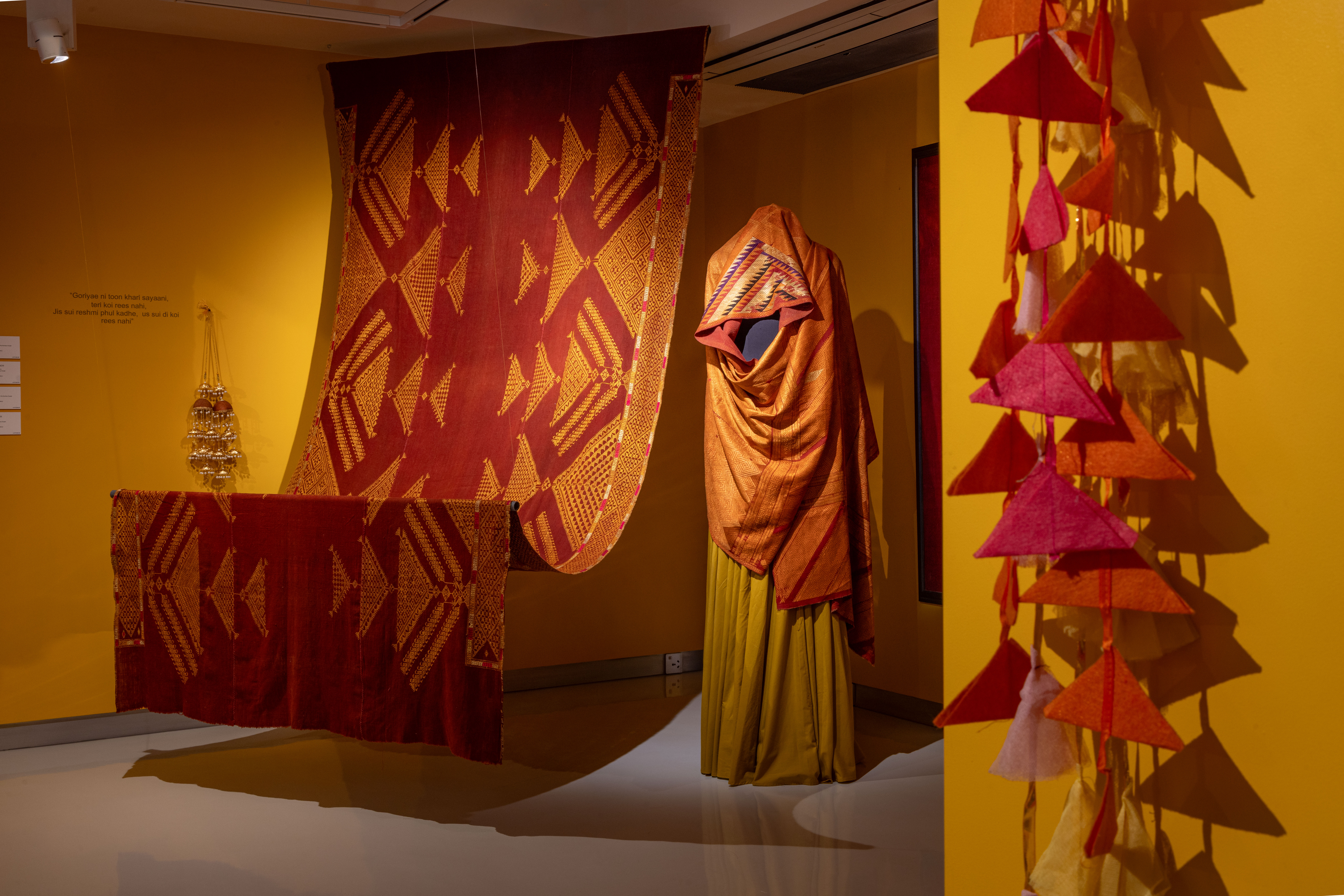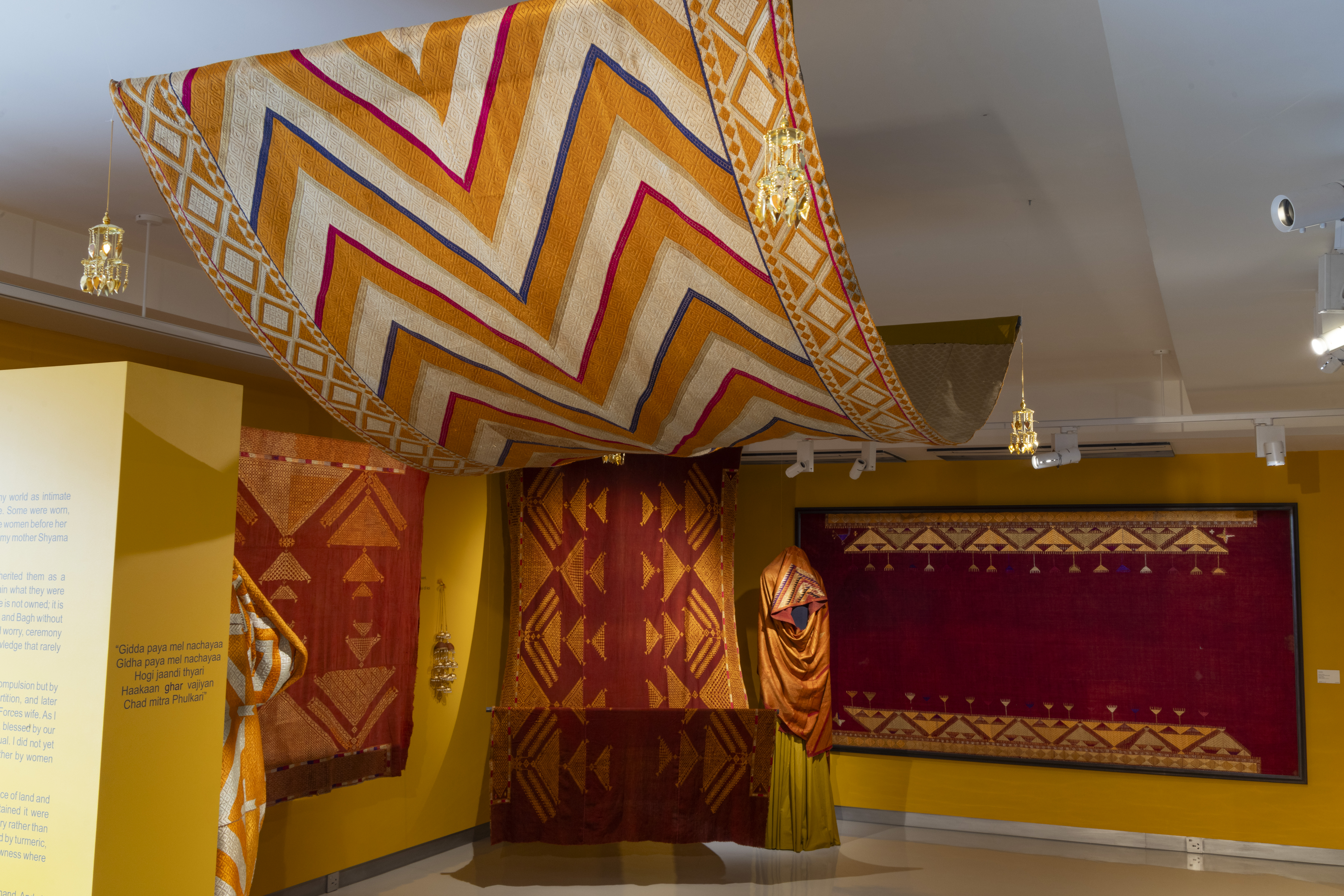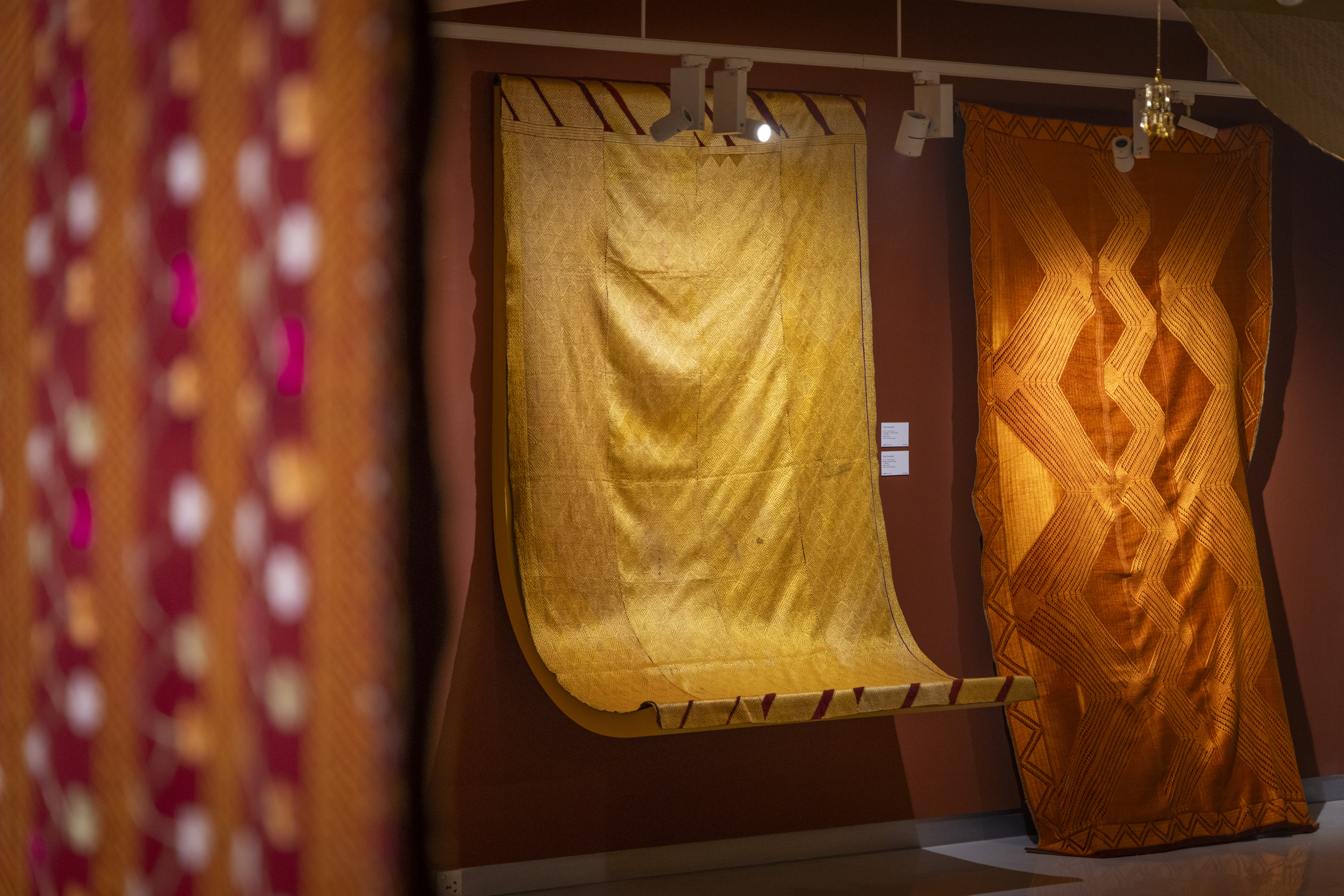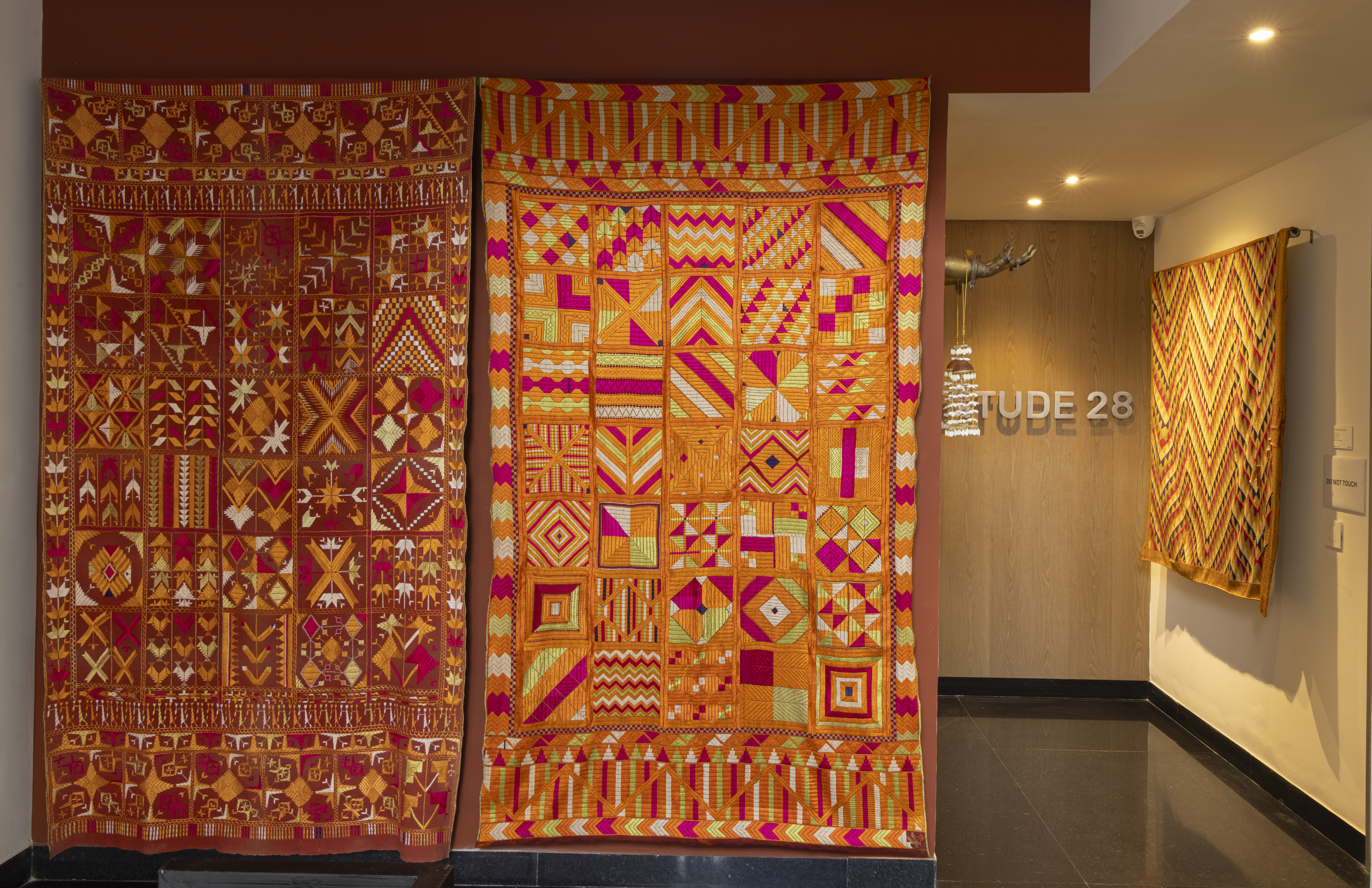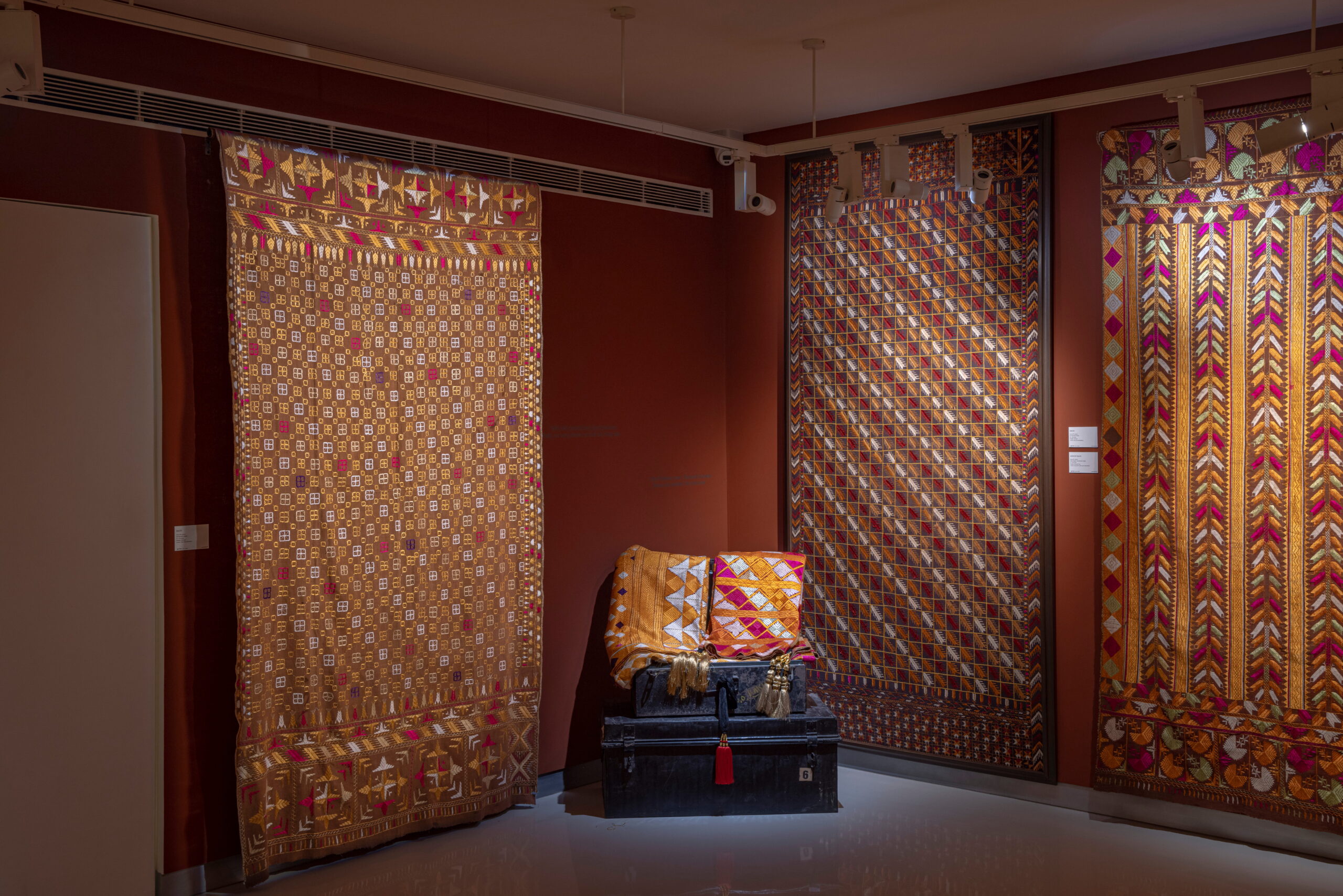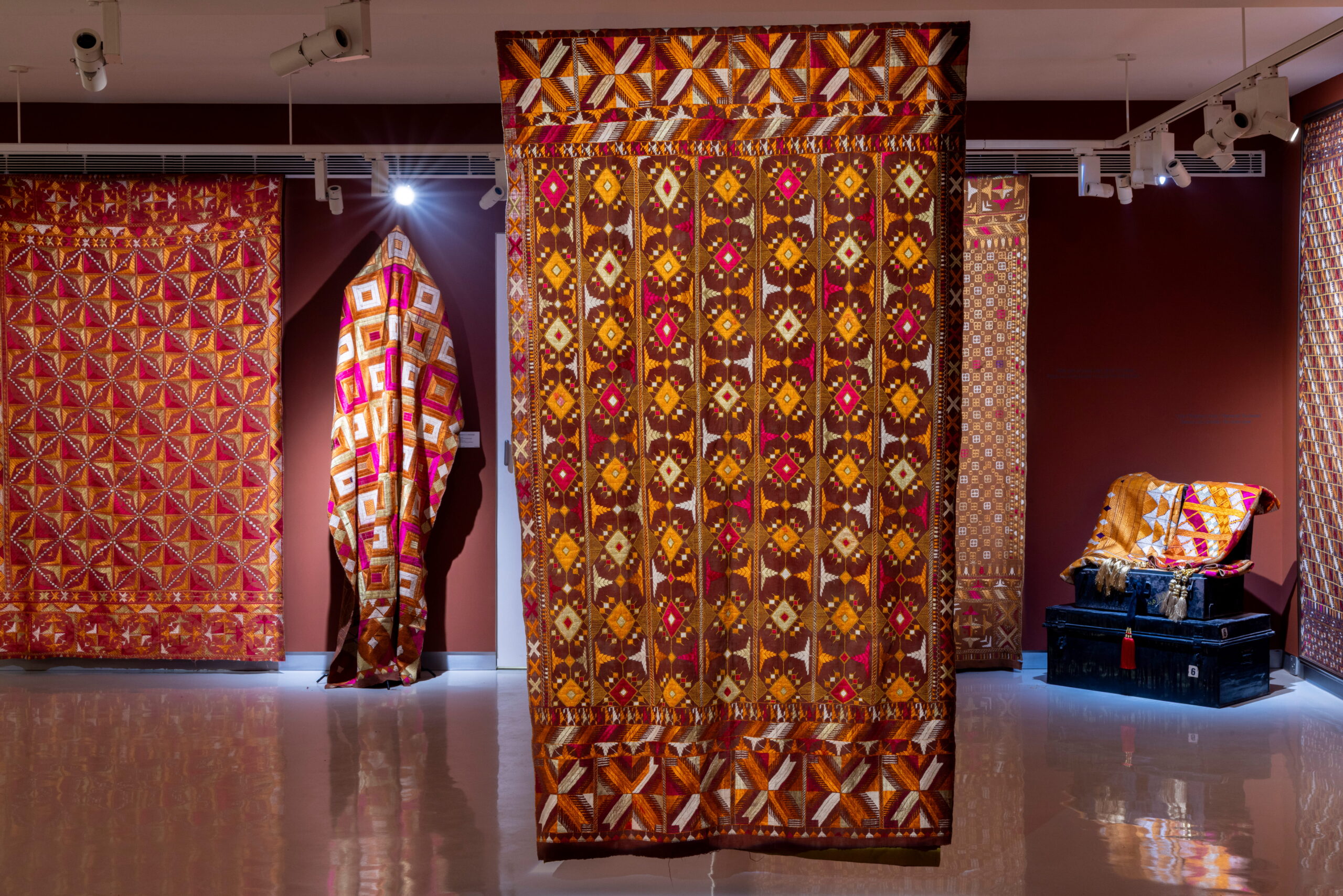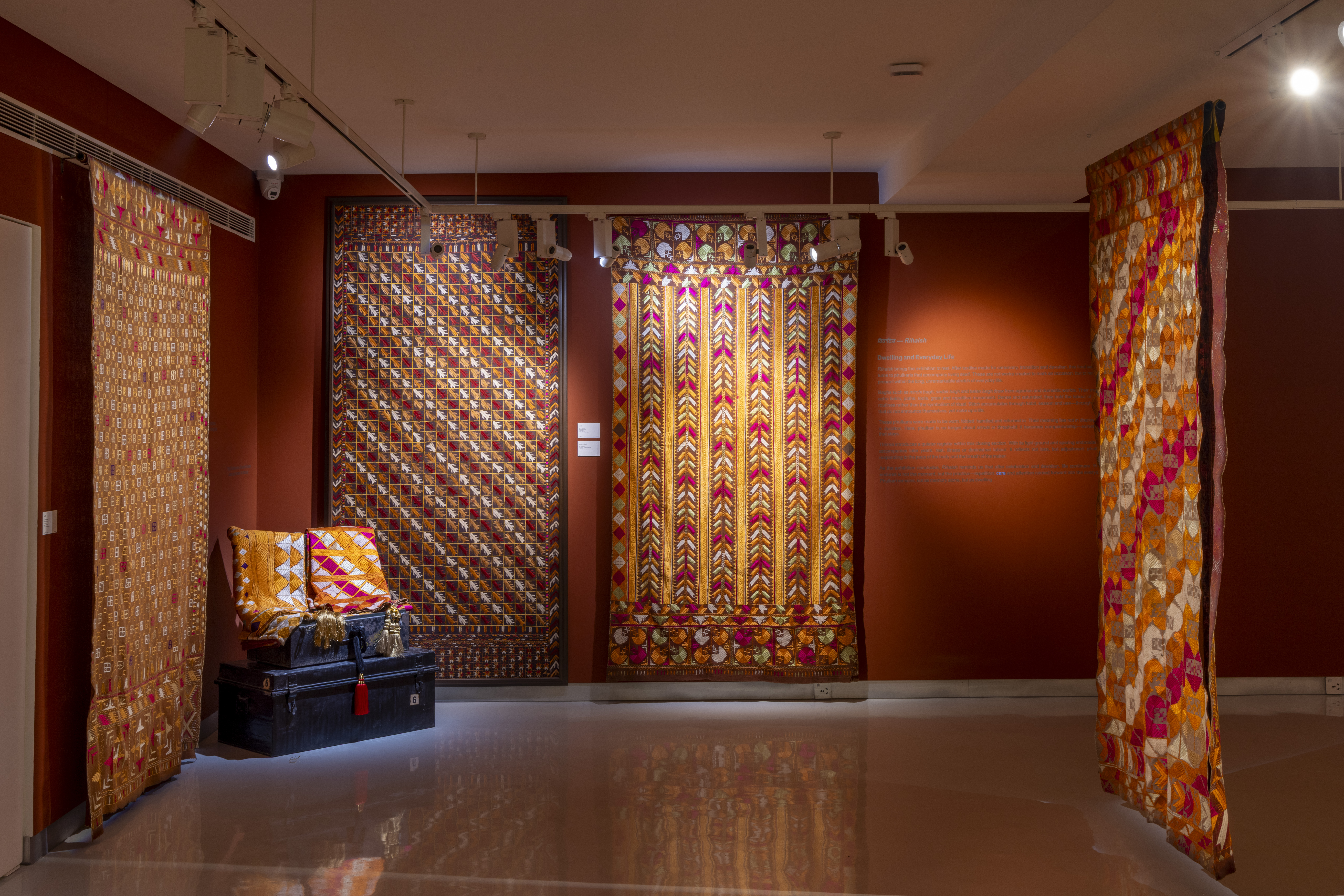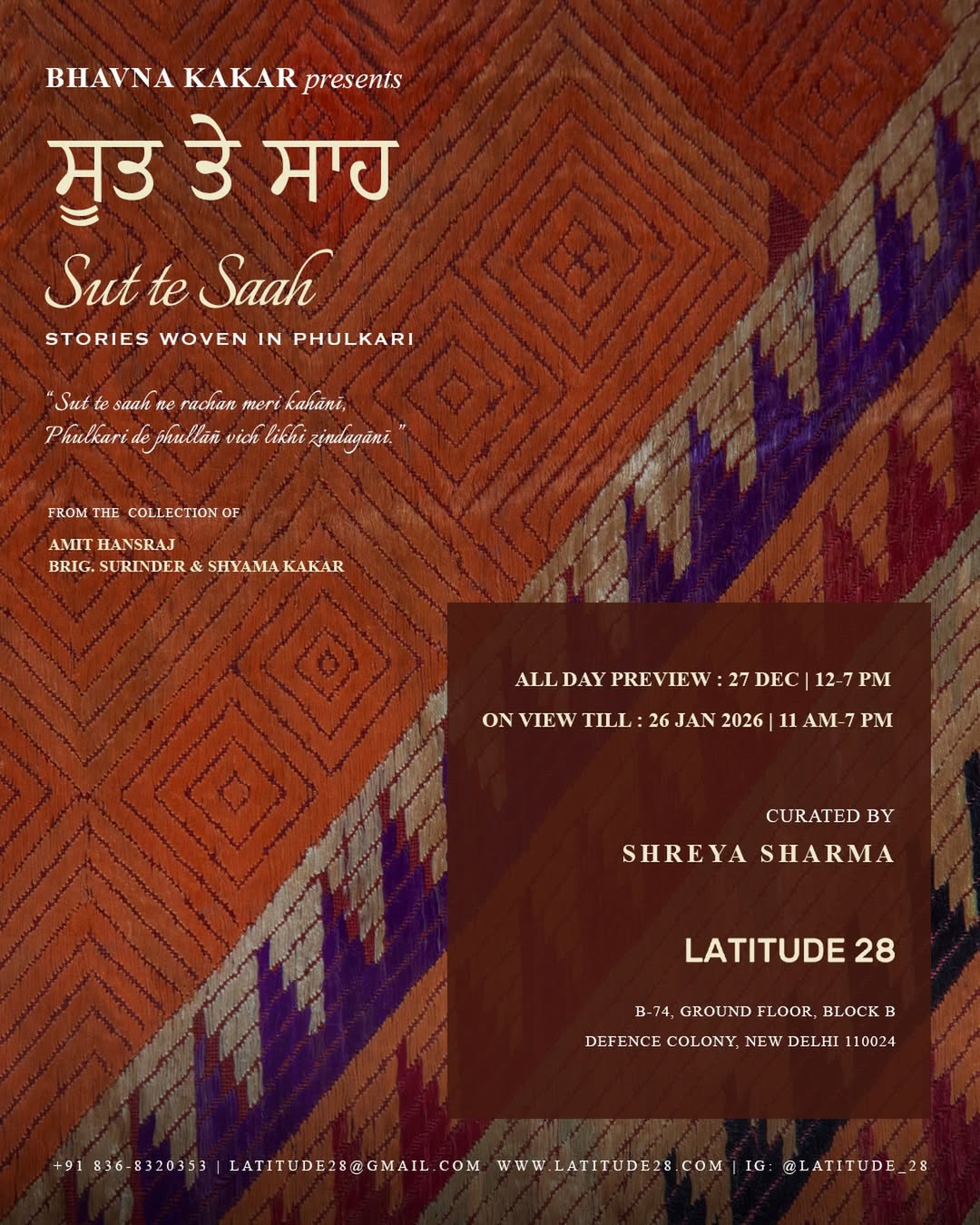
LATITUDE 28 presents ਸੂਤ ਤੇ ਸਾਹ — Sut te Saah: Stories Woven in Phulkari, an exhibition presented by Bhavna Kakar and curated by Shreya Sharma that journeys through the arc of human experience: birth, love, community, ritual and remembrance through the many forms of Pre-Partition Phulkaris and Baghs from Punjab.
The exhibition is structured across three interlinked sections; ਸੰਕਮਣ (Sankraman / Transition) which reflects moments of passage, birth, marriage and change, where phulkari becomes a carrier of blessing, protection and continuity. ਿਵਸ਼ਵਾਸ ਅਤੇ ਕਥਾ (Vishvaas ate Katha / Belief and Narrative), brings together faith, folklore and oral memory, tracing how belief systems and stories were stitched into cloth rather than written into history and ਿਰਹਾਇਸ਼ (Rihaish / Dwelling and Everyday Life) turns to the domestic and the everyday, where phulkari lived within homes, rituals and routines, quietly shaping women’s worlds across generations.Showcasing more than 40 rare Pre-Partition Phulkaris and Baghs from the private and family collections of designer Amit Hansraj and Brig. Surinder & Shyama Kakar, this landmark exhibition marks one of the first major presentations of Phulkaris and Baghs at a private gallery in India. Spanning works from the Majha, Doaba regions and Malwa regions, the exhibition offers a rare, holistic view into the textile traditions, social customs and ritualistic practices of the Pre-Partition era, bringing together a body of material culture that has remained largely inaccessible to the public until now at LATITUDE 28.
The exhibition takes its title from the folk verse:
“Sut te saah ne rachan meri kahāṇī,
Phulkari de phullāñ vich likhi zindagānī.”
(Thread and breath have woven my story; in the flowers of Phulkari, my life is written.)
Here, Phulkari is viewed not simply as embroidery, but as a written archive; stitched by women whose stories rarely found space in formal histories. Bringing together sacred, domestic, ceremonial and utilitarian expressions of the tradition, including Chope, Vari-da-Bagh, Sainchi, Baghs and Thirma Phulkari, the exhibition highlights how this practice has served as a quiet yet potent record of women’s inner worlds.
Chope holds the tenderness of beginnings, wrapped in the blessings by the maternal grandmother, offered to a bride as she steps into a new life. Vari-da-Bagh glows with auspicious motifs, made with love and care for ceremonies that bind families and communities. Sainchi Phulkari captures everyday life: moments of humour, stories from the village, the gentle rhythm of rural routines and the valour of the community. Baghs unfold like fields of colour, dense and luminous reflecting devotion, patience and the artistry of women working quietly, often collectively. Thirma, with its white ground, carries the weight of silence associated with purity, reflection and the softer, more somber transitions of life.
Together, these textiles trace a deeply human journey: from birth to marriage, from domestic warmth to communal ritual, from celebration to loss. They map the lived experiences of Punjabi women across generations, reminding us how life itself gets held and remembered in thread.
INSTALLATION VIEWS