
“Not even Vāta is the peer of Kāma, not Agni,
Chandramas the Moon, nor Sūrya.
Stronger than these art thou, and great for ever,
Kāma, to thee, to thee I offer worship.”
— Atharvaveda, 9.2.24
In Hindu philosophy, Kāmadeva, the god of love and desire, occupies a significant place. Desire (kāma) is understood not merely as sensual pleasure, but as a primordial impulse of creation. The body is a site of worship, desire a creative force, and beauty a manifestation of the divine. The union of lovers is often understood as a metaphor for the union of the individual soul
with the Absolute. In Jayadeva’s Gita Govinda, Krishna, held in Radha’s embrace, reaches a state of joy in which all sense of duality dissolves. In Bhakti traditions, too, the divine is envisioned as a deeply longed-for beloved.
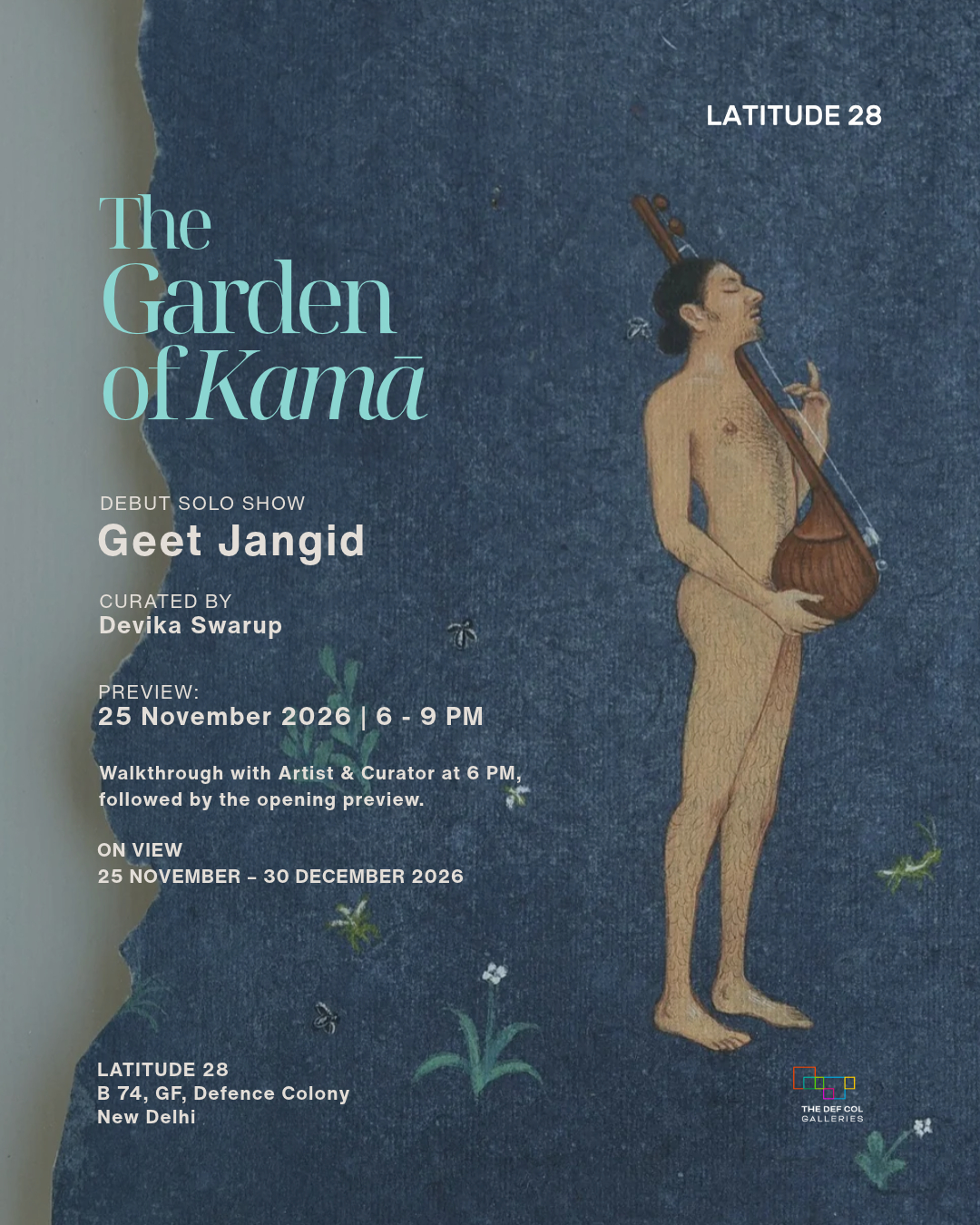
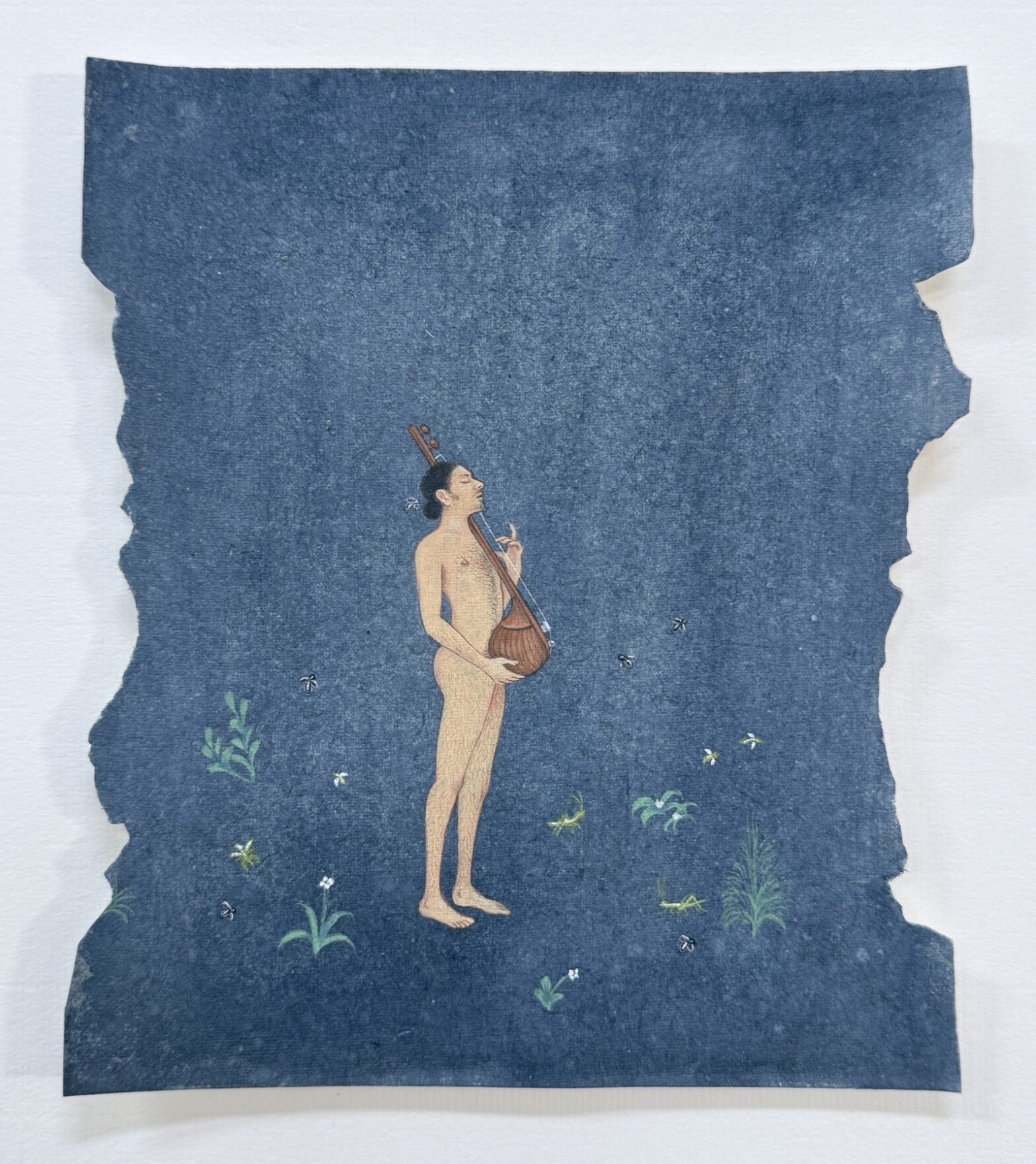
Geet Jangid’s work invites the viewer into this intimate world of longing, desire and devotion. He embraces the erotic and sensory pleasures of the body. Here, desire plays a game of approach and retreat. Longing remains unfulfilled, and its sweet melody lies in the waiting.
The melody in this series of work is drawn from Raga Tilak Kamod, a late-evening raga that evokes a mood of joyful longing. Jangid’s works possess a musicality reminiscent of Ragamala paintings, the visual depictions of ragas that emerged in medieval India. He composes form and emptiness on paper in much the same way a musician composes sound and silence.
The protagonists in Jangid’s work embody both masculine and feminine attributes, challenging conventional ideas of gender and allowing for an unfiltered celebration of the body and its humanness. His embrace of the erotic also reclaims the body from moral restraints, returning to an Indian aesthetic tradition in which sensuality and spirituality coexist.
In his garden of Kamā, Geet refers to well-established visual, musical and literary traditions, playfully reshaping them into a language uniquely his own.
– Devika Swarup